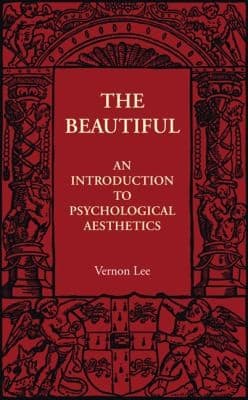
The Beautiful: An Introduction to Psychological AestheticsLee, Vernon
Philosophy
The Beautiful: An Introduction to Psychological Aesthetics
Lee, Vernon
Aesthetics; Form (Aesthetics); Psychology, Applied
But while it takes days, months, sometimes years to produce a work
of art, it may require (the process has been submitted to exact
measurement by the stop-watch) not minutes but seconds, to take
stock of that work of art in such manner as to carry away its every
detail of shape, and to continue dealing with it in memory. The
unsuspected part played by memory explains why aesthetic
contemplation can be and normally is, an intermittent function
alternating with practical doing and thinking. It is in memory,
though memory dealing with what we call the present, that we
gather up parts into wholes and turn consecutive measurements into
simultaneous relations; and it is probably in memory that we deal
empathically with shapes, investing their already perceived
directions and relations with the remembered qualities of our own
activities, aims and moods. And similarly it is thanks to memory that
the brief and intermittent acts of aesthetic appreciation are combined
into a network of contemplation which intermeshes with our other
thoughts and doings, and yet remains different from them, as the
restorative functions of life remain different from life's expenditure,
although interwoven with them. Every Reader with any habit of
self-observation knows how poignant an impression of beauty may be
got, as through the window of an express train, in the intermittence
of practical business or abstract thinking, nay even in what I have
called the _off-beat_ of deepest personal emotion, the very stress of
the practical, intellectual or personal instant (for the great
happenings of life are measured in seconds!) apparently driving in
by contrast, or conveying on its excitement, that irrelevant aesthetic
contents of the _off-beat_ of attention. And while the practical or
intellectual interest changes, while the personal emotion subsides,
that aesthetic impression remains; remains or recurs, united, through
every intermittence, by the feeling of identity, that identity which,
like _the rising of the mountain,_ is due to the reiterative nature of
shape-contemplation: the fragments of melody may be interrupted in
our memory by all manner of other thoughts, but they will recur and
coalesce, and recurring and coalescing, bring with them the
particular mood which their rythms and intervals have awakened in
us and awaken once more.
That diagrammatic Man on the Hill in reality _thought away_ from
the landscape quite as much as his practical and scientific
companions; what he did, and they did not, was to think _back_ to it;
and think back to it always with the same references of lines and
angles, the same relations of directions and impacts, of parts and
wholes. And perhaps the restorative, the healing quality of aesthetic
contemplation is due, in large part, to the fact that, in the perpetual
flux of action and thought, it represents reiteration and therefore
stability.
Public-domain text, read in full here on John Shaqi.
Reviews
Reviews
No reviews yet
Be the first to share your thoughts on this work.
Elsewhere in the archive
Join the Discussion
Join the discussion
Sign in to leave a comment or review.
Sign InorCreate an account