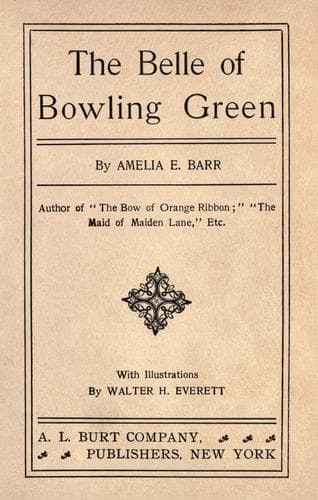
New York (N.Y.) -- Social life and customs -- 19th century -- Fiction; United States -- History -- War of 1812 -- Fiction
“So you see, though mother had these periods of loneliness and trial,
_we_ are reaping their harvest; and I am sure she is glad of it.”
“Grandfather was a strange ‘mixture of the elements’; so shrewd and
worldly-wise, and yet so romantic.”
“You may add sentiment to the romance. When he first entered Castle
Murray he saw it exactly as it had been left. No one had touched
anything. The old chief’s chair, as he pushed it from the table when he
had eaten his last meal in the home he was leaving, remained just at the
angle taken; a half-bottle of usquebaugh and an unbroken glass stood on
the bare oak table. The dust of generations lay an inch thick, and on
the hearthstone were a few remnants of half-burnt wood. These remnants
your grandfather carefully gathered, and when the first fire in the
Bowling Green house was lit they kindled it. But no one who ever saw
Leonard Murray buying or selling land would have dreamed that he had
room in his heart for a bit of sentiment like that.”
“I have heard him called a shrewd, hard man.”
“I know. Listen again. You have complained of the superabundance of
white roses at our old country home up the river?”
“Well, mother, they are absurdly out of proportion. They cover walls and
fences and over-run the garden, and ought to give place, in part, to
other flowers.”
“Not while I live. My mother and father carefully reared the first
growth from the seeds of one white rose, which in some way was vitally
connected with their love. There was a quarrel, and my mother rejected
the rose; and father kept it, and then after they were married they
planted the seed, and watched and nourished it, until it became a tree
bearing white roses. From slips of that tree the garden has been
garlanded with roses. I do not wish it changed, until you have put the
last earthly rose in my cold hands.”
“Dear mother! Dear mother!”
They talked over these incidents until Gerard returned; and then as they
took some slight refreshment together fell into speculations concerning
the past and present Bowling Green. Gerard was sympathetic with its
past, but enthusiastic as to its future. And when Mrs. Bloommaert spoke
feelingly of the dignified men who in early days had been the familiar
figures on its pleasant sidewalks, Gerard answered:
“Dear auntie, these dignified old merchants in breeches and beavers and
fine lawn ruffles have most worthy successors in the clean-shaved men of
to-day, sensibly clothed from their soft hats to their comfortably
low-cut shoes. Would it not be delightful to show some of these old,
dignified merchants over the new Bowling Green? Take them through Nassau
Street and way up Broadway? I think they would need all the training
they have been having since they died to bear it.”
“You ought not to speak so lightly of the future life, Gerard.”
“Auntie, your pardon! But do you think that only the incarnated improve?
May not the de-incarnated be progressing also?”
Public-domain text, read in full here on John Shaqi.
Reviews
Reviews
No reviews yet
Be the first to share your thoughts on this work.
Elsewhere in the archive
Join the Discussion
Join the discussion
Sign in to leave a comment or review.
Sign InorCreate an account