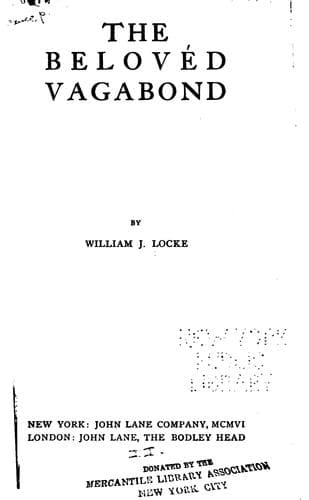
Homeless persons -- Fiction; London (England) -- Fiction
As the prim salon provided little interest for an idle youth, I followed
her into the slip of a kitchen, where I lounged in great contentment and
discomfort. Blanquette relapsed into her fatalistic attitude towards
life and seemed to dismiss the disastrous subject from her mind. While
she prepared the simple meal she entertained me with an account of the
farm near Chartres. There were so many cows, so many ducks and hens and
so many pigs. She rose at five every morning and milked the cows. Oh,
she had milked cows as a child and had not forgotten the art. It was
difficult for those who did not know. _Tiens!_ She demonstrated with
finger and thumb and a lettuce how it was done.
"I shall not forget it," said I.
"It is good to know things," she remarked seriously.
"One never can tell," said I, "when a cow will come to you weeping to be
milked: especially in the Rue des Saladiers."
"That is true," replied Blanquette. "The oddest things happen
sometimes."
Light satire was lost on Blanquette.
After dinner she continued the recital of her adventures for the
Master's delectation. The old couple no longer able to look after the
farm were desirous of selling it, so that they could retire to Evreux
where their only son who had married a rich wife kept a prosperous
hotel.
"Do you know what they said, Master. 'Why does not Monsieur Paragot, who
must be very rich, buy it from us and come to live in the country
instead of that dirty Paris?' _C'est drôle, hein?_"
"Why do they think I am very rich?"
"That is what I asked them. They said if a man did not work he must be
either rich or a rogue; and they know you are not a rogue, _mon
Maître_."
"They flatter me," said Paragot. "Would you like to live in the country,
Blanquette?"
"Oh yes!" she cried with conviction. "_Il y a des bêtes. J'adore ça._
And then it smells so good."
"It does," he sighed. "I haven't smelt it for over three years. Ah! to
have the scent of the good wet earth in one's nostrils and the sound of
bees in one's ears. For two pins I would go gipsying again. If I were a
rich man, my little Blanquette, I would buy the farm, and give it you as
your dowry, and sometimes you would let me come and stay with you."
"But as I shall never marry, _mon Maître_, there will be no need of a
dowry."
She said it smilingly, as if she welcomed her lot as a predestined old
maid. There was not a sign on her plain pleasant face of the torment
raging in her bosom. In my youthful ignorance I did not know whether to
deplore woman's deceit or to admire her stout-heartedness.
"My child," said Paragot, "no human being can, without arrogance, say
what he will or what he will not do. Least of all a woman."
Having uttered this profound piece of wisdom my master went to bed.
* * * * *
Public-domain text, read in full here on John Shaqi.
Reviews
Reviews
No reviews yet
Be the first to share your thoughts on this work.
Elsewhere in the archive
Join the Discussion
Join the discussion
Sign in to leave a comment or review.
Sign InorCreate an account