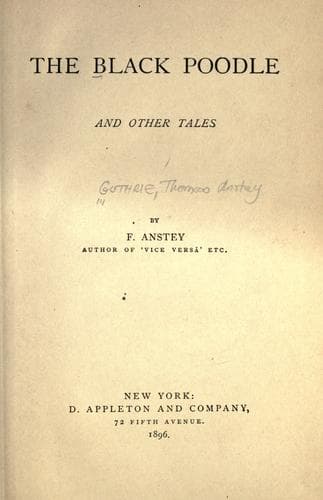
English fiction -- 19th century; Short stories, English
But he was standing in an extremely rickety chariot, which was crammed
with his nearer relations and a few old friends, to whom he had been
obliged to send tickets. At his back stood a slave who held a heavy
Etruscan crown on the Consul's head, and whenever he thought his master
was growing conceited, threw in the reminder that he was only a man
after all--a liberty which at any other time he might have had good
reason to regret.
Then the large Delphic wreath, which Duilius wore as well as the crown,
had slipped down over one eye and was tickling his nose, while--as both
his hands were occupied, one with a sceptre, the other with a laurel
bough, and he had to hold on tightly to the rail of the chariot whenever
it jolted--there was nothing to do but suffer in silence.
They had insisted, too, upon painting him a beautiful bright red all
over, and though it made him look quite new, and very shining and
splendid, he had his doubts at times whether it was altogether becoming,
and particularly, whether he would ever be able to get it off again.
But these were but trifles after all, and nothing compared with the
honour and glory of it! Was not everybody straining to catch a glimpse
of him? Did not even the spotted and skittish horses which drew the
chariot repeatedly turn round to gaze upon his vermilioned features? As
Duilius remarked this, he felt that he was, indeed, the central
personage in all this magnificence, and that, on the whole, he liked
it.
He could see the beaks of the ships he had captured, bobbing up and down
in the middle distance; he could see the white bulls destined for
sacrifice entering completely into the spirit of the thing, and
redeeming the procession from any monotony by occasionally bolting down
a back street, or tossing on their gilded horns some of the flamens who
were walking solemnly in front of them.
He could hear, too, above five distinct brass bands, the remarks of his
friends as they predicted rain, or expressed a pained surprise at the
smallness of the crowd and the absence of any genuine enthusiasm; and he
caught the general purport of the very offensive ribaldry circulated at
his own expense among the brave legions that brought up the rear.
This was merely the usual course of things on such occasions, and a
great compliment when properly understood, and Duilius felt it to be so.
In spite of his friends, and the red paint, and the familiar slave, in
spite of the extreme heat of the weather and his itching nose, he told
himself that this--and this alone--was worth living for.
And it was a painful reflection to him that, after all, it would only
last a day: he could not go on triumphing like this for the remainder of
his natural life--he would not be able to afford it on his moderate
income; and yet--and yet--existence would fall woefully flat after so
much excitement.
Public-domain text, read in full here on John Shaqi.
Reviews
Reviews
No reviews yet
Be the first to share your thoughts on this work.
Elsewhere in the archive
Join the Discussion
Join the discussion
Sign in to leave a comment or review.
Sign InorCreate an account