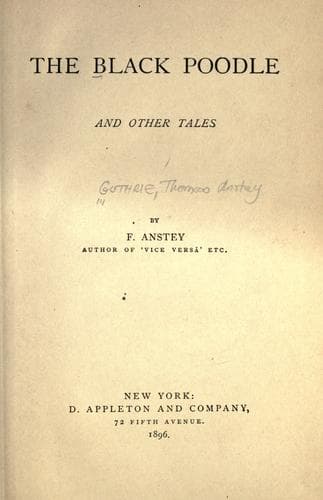
English fiction -- 19th century; Short stories, English
It may be supposed that Duilius was naturally fond of ostentation and
notoriety, but this was far from being the case; on the contrary, at
ordinary times his disposition was retiring and almost shy; but his
sudden success had worked a temporary change in him, and in the very
flush of triumph he found himself sighing to think that, in all human
probability, he would never go about with trumpeters and trophies, with
flute-players and white oxen, any more in his whole life.
And then he reached the Porta Triumphalis, where the chief magistrates
and the Senate awaited them, all seated upon spirited Roman-nosed
chargers, which showed a lively emotion at the approach of the
procession, and caused some of their riders to dismount, with as much
affectation of method and design as their dignity enjoined and the
nature of the occasion permitted.
There Duilius was presented with the freedom of the City and an address,
which last he put in his pocket, as he explained, to read at home.
And then an Ædile informed him in a speech, during which he twice lost
his notes and had to be prompted by a lictor, that the grateful
Republic, taking into consideration the Consul's distinguished services,
had resolved to disregard expense, and on that auspicious day to give
him whatever reward he might choose to demand--'in reason,' the Ædile
added cautiously, as he quitted his saddle with an unexpectedness which
scarcely seemed intentional.
Duilius was naturally a little overwhelmed by such liberality, and, like
everyone else favoured suddenly with such an opportunity, was quite
incapable of taking complete advantage of it.
For a time he really could not remember in his confusion anything he
would care for at all, and he thought it might look mean to ask for
money.
At last he recalled his yearning for a Perpetual Triumph, but his
natural modesty made him moderate, and he could not find courage to ask
for more than a fraction of the glory that now attended him.
So, not without some hesitation, he replied that they were exceedingly
kind, and since they left it entirely to his discretion, he would
like--if they had no objection--he would like a flute-player to attend
him whenever he went out.
Duilius very nearly asked for a white bull as well; but, on second
thoughts, he felt it might lead to inconvenience, and there were many
difficulties connected with the proper management of such an animal; the
Consul, from what he had seen that day, felt that it would be imprudent
to trust himself in front of the bull--while, if he walked behind, he
might be mistaken for a cattle-driver, which would be odious. And so he
gave up that idea, and contented himself with a simple flute-player.
Public-domain text, read in full here on John Shaqi.
Reviews
Reviews
No reviews yet
Be the first to share your thoughts on this work.
Elsewhere in the archive
Join the Discussion
Join the discussion
Sign in to leave a comment or review.
Sign InorCreate an account