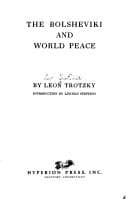
Communism -- Soviet Union; Europe -- Social conditions -- 20th century; Socialism; World War, 1914-1918
Austria’s ultimatum to Servia was the decisive step in this direction.
"Austria-Hungary took this step under the pressure of necessity," wrote
Eduard Bernstein in _Die Sozialistische Monatshefte_ (No. 16). To be
sure it was, if political events are considered from the viewpoint of
_dynastic_ necessity.
To defend the Hapsburg policy on the ground of the low moral standard of
the Belgrade rulers is to close one’s eyes to the fact that the
Hapsburgs did make friends with Servia, but only when Servia was under
the most despicable government that the history of the unfortunate
Balkan Peninsula has known, that is, when it had at its head an Austrian
agent, Milan. The reckoning with Servia came so late because the
efforts made at self-preservation were too weak in the enfeebled
organism of the Dual Monarchy. But after the death of the Archduke, the
support and hope of the Austrian military party--and of
Berlin--Austria’s ally gave her a sharp dig in the ribs, insisting upon
a demonstration of firmness and strength. Not only was Austria’s
ultimatum to Servia approved of in advance by the rulers of Germany,
but, according to all information, it was actually inspired from that
quarter. The evidence is plainly set forth in the very same White Book
which professional and amateur diplomats offer as a document of the
Hohenzollern love of peace.
After defining the aims of Greater Servian propaganda and the
machinations of Czarism in the Balkans, the White Book states:
"Under such conditions Austria was forced to the realization
that it was not compatible with the dignity or the
self-preservation of the Monarchy to look on at the doings
across the border and remain passive. The Imperial Government
informed us of this view and asked for our opinion. We could
sincerely tell our ally that we agreed with his estimate of the
situation and could assure him that any action he might find
necessary to put an end to the movement in Servia against the
Austrian Monarchy would meet with our approval. In doing so, we
were well aware of the fact that eventual war operations on the
part of Austria-Hungary might bring Russia into the field and
might, according to the terms of our alliance, involve us in a
war.
Public-domain text, read in full here on John Shaqi.
Reviews
Reviews
No reviews yet
Be the first to share your thoughts on this work.
Join the Discussion
Join the discussion
Sign in to leave a comment or review.
Sign InorCreate an account