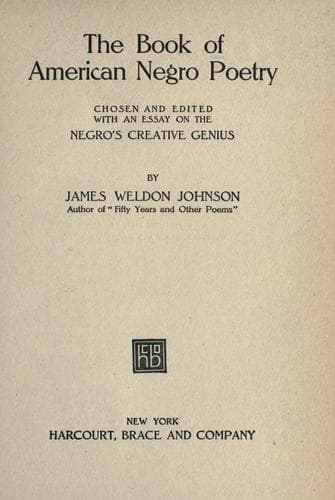
African Americans -- Poetry; American poetry -- African American authors
Plácido is in some respects the greatest of all the Cuban poets. In sheer
genius and the fire of inspiration he surpasses even the more finished
Heredia. Then, too, his birth, his life and his death ideally contained
the tragic elements that go into the making of a halo about a poet's head.
Plácido was born in Habana in 1809. The first months of his life were
passed in a foundling asylum; indeed, his real name, Gabriel de la
Concepcion Valdés, was in honor of its founder. His father took him out of
the asylum, but shortly afterwards went to Mexico and died there. His
early life was a struggle against poverty; his youth and manhood was a
struggle for Cuban independence. His death placed him in the list of Cuban
martyrs. On the 27th of June, 1844, he was lined up against a wall with
ten others and shot by order of the Spanish authorities on a charge of
conspiracy. In his short but eventful life he turned out work which bulks
more than six hundred pages. During the few hours preceding his execution
he wrote three of his best known poems, among them his famous sonnet,
"Mother, Farewell!"
Plácido's sonnet to his mother has been translated into every important
language; William Cullen Bryant did it in English; but in spite of its
wide popularity, it is, perhaps, outside of Cuba the least understood of
all Plácido's poems. It is curious to note how Bryant's translation
totally misses the intimate sense of the delicate subtility of the poem.
The American poet makes it a tender and loving farewell of a son who is
about to die to a heart-broken mother; but that is not the kind of a
farewell that Plácido intended to write or did write.
The key to the poem is in the first word, and the first word is the
Spanish conjunction _Si_ (if). The central idea, then, of the sonnet
is, "If the sad fate which now overwhelms me should bring a pang to your
heart, do not weep, for I die a glorious death and sound the last note of
my lyre to you." Bryant either failed to understand or ignored the opening
word, "If," because he was not familiar with the poet's history.
Public-domain text, read in full here on John Shaqi.
Reviews
Reviews
No reviews yet
Be the first to share your thoughts on this work.
Join the Discussion
Join the discussion
Sign in to leave a comment or review.
Sign InorCreate an account