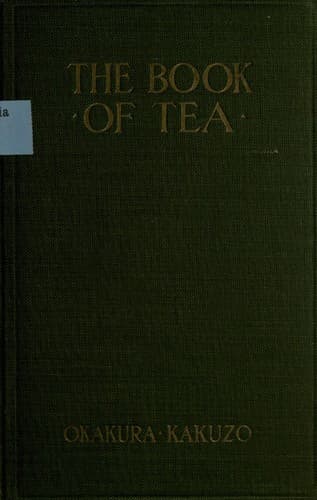
Japan -- Social life and customs; Japanese tea ceremony; Tea
It is in the Japanese tea ceremony that we see the culmination of
tea-ideals. Our successful resistance of the Mongol invasion in 1281
had enabled us to carry on the Sung movement so disastrously cut off in
China itself through the nomadic inroad. Tea with us became more than
an idealisation of the form of drinking; it is a religion of the art of
life. The beverage grew to be an excuse for the worship of purity and
refinement, a sacred function at which the host and guest joined to
produce for that occasion the utmost beatitude of the mundane. The
tea-room was an oasis in the dreary waste of existence where
weary travellers could meet to drink from the common spring of
art-appreciation. The ceremony was an improvised drama whose plot was
woven about the tea, the flowers, and the paintings. Not a colour to
disturb the tone of the room, not a sound to mar the rhythm of things,
not a gesture to obtrude on the harmony, not a word to break the
unity of the surroundings, all movements to be performed simply and
naturally--such were the aims of the tea-ceremony. And strangely enough
it was often successful. A subtle philosophy lay behind it all. Teaism
was Taoism in disguise.
III. Taoism and Zennism
The connection of Zennism with tea is proverbial. We have already
remarked that the tea-ceremony was a development of the Zen ritual. The
name of Laotse, the founder of Taoism, is also intimately associated
with the history of tea. It is written in the Chinese school manual
concerning the origin of habits and customs that the ceremony of
offering tea to a guest began with Kwanyin, a well-known disciple of
Laotse, who first at the gate of the Han Pass presented to the "Old
Philosopher" a cup of the golden elixir. We shall not stop to discuss
the authenticity of such tales, which are valuable, however, as
confirming the early use of the beverage by the Taoists. Our interest
in Taoism and Zennism here lies mainly in those ideas regarding life and
art which are so embodied in what we call Teaism.
It is to be regretted that as yet there appears to be no adequate
presentation of the Taoists and Zen doctrines in any foreign language,
though we have had several laudable attempts.
Translation is always a treason, and as a Ming author observes, can at
its best be only the reverse side of a brocade,--all the threads are
there, but not the subtlety of colour or design. But, after all, what
great doctrine is there which is easy to expound? The ancient sages
never put their teachings in systematic form. They spoke in paradoxes,
for they were afraid of uttering half-truths. They began by talking like
fools and ended by making their hearers wise. Laotse himself, with his
quaint humour, says, "If people of inferior intelligence hear of the
Tao, they laugh immensely. It would not be the Tao unless they laughed
at it."
Public-domain text, read in full here on John Shaqi.
Reviews
Reviews
No reviews yet
Be the first to share your thoughts on this work.
Join the Discussion
Join the discussion
Sign in to leave a comment or review.
Sign InorCreate an account