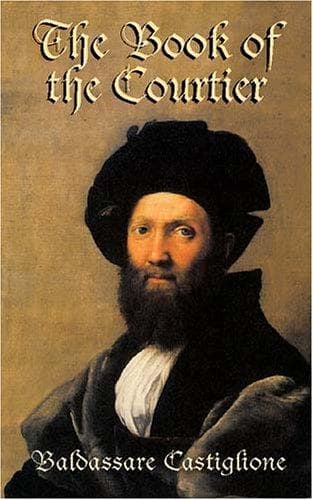
The Book of the CourtierCastiglione, Baldassarre, conte
History
The Book of the Courtier
Castiglione, Baldassarre, conte
Courtesy -- Early works to 1800; Courts and courtiers -- Early works to 1800
“The things that you and many others find inferior to their reputation,
are for the most part of such sort that the eye can judge of them at a
glance,—as if you had never been at Naples or Rome, and from hearing
them so much talked of, you were to imagine something far beyond what
they afterwards proved to be when seen; but such is not the case with
men’s character, because that which is outwardly seen is the least part.
Thus, on first hearing a gentleman speak, if you should not find in him
that worth which you had previously imagined, you would not at once
reverse your good opinion of him, as you would in those matters whereof
the eye is instant judge, but you would wait from day to day to discover
some other hidden virtue, still holding fast to the good impression you
had received from so many lips; and later, if he were thus richly
endowed (as I assume our Courtier to be), your confidence in his
reputation would be hourly confirmed, because his acts would justify it,
and you would be always imagining something more than you saw.
34.—“And surely it cannot be denied that these first impressions have
very great weight, and that we ought to be very careful regarding them.
And to the end that you may see how important they are, I tell you that
in my time I knew a gentleman, who, while he was of very gentle aspect
and modest manners and also valiant in arms, yet did not so greatly
excel in any of these things but that he had many equals and even
superiors. However, fate so willed that a lady chanced to fall most
ardently in love with him, and her love increasing daily with the signs
that the young man gave of loving her in return, and there being no way
for them to speak together, she was moved by excess of passion to reveal
her desires to another lady through whom she hoped to secure some
assistance. This lady was in no wise inferior to the first in rank or
beauty; whence it came to pass, that on hearing the young man (whom she
had never seen) spoken of so tenderly, and perceiving that he was
extravagantly loved by her friend (whom she knew to be very discreet and
of excellent judgment), she straightway imagined him to be the
handsomest and wisest and most discreet and in short the most lovable
man in the world. And thus, without having seen him, she became so
passionately enamoured of him, that she began making every effort to
secure him, not for her friend but for herself, and inducing him to
return her love: which she succeeded in doing with little effort, for in
truth she was a lady rather to be wooed than to woo others.
Public-domain text, read in full here on John Shaqi.
Reviews
Reviews
No reviews yet
Be the first to share your thoughts on this work.
Elsewhere in the archive
Join the Discussion
Join the discussion
Sign in to leave a comment or review.
Sign InorCreate an account