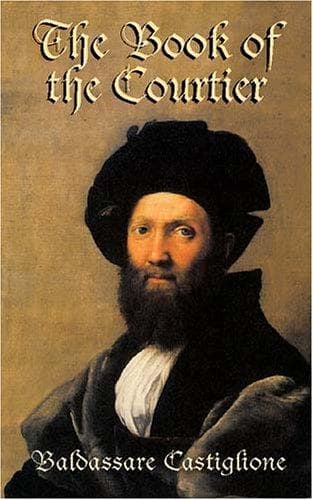
The Book of the CourtierCastiglione, Baldassarre, conte
History
The Book of the Courtier
Castiglione, Baldassarre, conte
Courtesy -- Early works to 1800; Courts and courtiers -- Early works to 1800
“But since such complete perfection as this is very rarely and perhaps
never found in human nature, a man who is conscious of being lacking in
some particular, ought not to despond thereat or lose hope of reaching a
high standard, even though he cannot attain that perfect and supreme
excellence to which he aspires. For in every art there are many grades
that are honourable besides the highest, and whoever aims at the highest
will seldom fail to rise more than half-way. Therefore if our Courtier
excels in anything besides arms, I would have him get profit and esteem
from it in fine fashion; and I would have him so discreet and sensible
as to be able with skill and address to attract men to see and hear that
wherein he thinks he excels, always appearing not to do it from
ostentation, but by chance and at others’ request rather than by his own
wish. And in everything he has to do or say, let him if possible come
ready and prepared, yet appearing to act impromptu throughout. In those
things, however, wherein he feels himself to be mediocre, let him touch
in passing, without dwelling much upon them, albeit in such fashion that
he may be thought to know more about them than he shows himself to know:
like certain poets, who sometimes touched lightly upon the profoundest
depths of philosophy and other sciences, of which perhaps they
understood little. Then, in that of which he knows he is wholly
ignorant, I would never have him make any pretence or seek to win any
fame; nay if need be, let him frankly confess his ignorance.”
[Illustration:
LEONARDO DA VINCI
“...ONE OF THE FIRST PAINTERS OF THE WORLD...”
1452-1519
]
Reduced from Braun’s photograph (no. 79.207) of Leonardo’s drawing in
the Royal Library at Windsor. For an account of this and other less
authentic portraits, see Müntz’s life of Leonardo da Vinci (London:
1898), ii, 225 _et seq._
39.—“That,” said Calmeta, “is not what Nicoletto[180] would have done,
who was a very excellent philosopher but knew no more about law than
about flying. When a Podestà[181] of Padua had decided to give him a
lectureship in law, he was never willing (although urged thereto by many
scholars) to undeceive the Podestà and confess his ignorance,—always
saying that he did not agree with the opinion of Socrates in this
matter, and that it was not seemly for a philosopher ever to say that he
was ignorant of anything.”
Messer Federico replied:
Public-domain text, read in full here on John Shaqi.
Reviews
Reviews
No reviews yet
Be the first to share your thoughts on this work.
Elsewhere in the archive
Join the Discussion
Join the discussion
Sign in to leave a comment or review.
Sign InorCreate an account