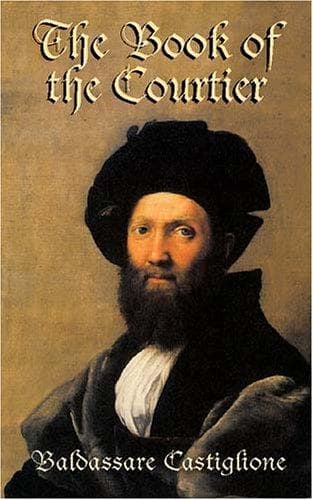
The Book of the CourtierCastiglione, Baldassarre, conte
History
The Book of the Courtier
Castiglione, Baldassarre, conte
Courtesy -- Early works to 1800; Courts and courtiers -- Early works to 1800
“I do not say that of his own notion and unasked by others, the Courtier
should volunteer to tell his ignorance; for I too dislike this folly of
self-accusal and depreciation. And therefore I sometimes inwardly laugh
at certain men, who needlessly and of their own accord narrate things
that perhaps occurred without their fault but yet imply a shade of
disgrace; like a cavalier whom you all know, and who, whenever he heard
mention made of the battle that was fought against King Charles in the
Parmesan,[182] at once began to tell the manner of his flight, nor
seemed to have seen or heard aught else that day; again, speaking of a
certain famous joust, he always described how he had fallen, and in his
conversation he often seemed to seek an opportunity to tell how he had
received a sound cudgelling one night as he was on his way to meet a
lady.
“I would not have our Courtier tell such follies. It seems to me,
however, that when occasion offers for displaying himself in something
of which he is quite ignorant, he ought to avoid it; and if compelled by
necessity, he ought to confess his ignorance frankly rather than put
himself to that risk. And in this way he will escape the censure that
many nowadays deserve, who from some perverse instinct or unreasonable
design always set themselves to do that which they do not know, and
forsake that which they do know. And as an instance of this, I know a
very excellent musician, who, having abandoned music, gave himself up
wholly to composing verses, and thinks himself very great therein, and
makes all men laugh at him; and now he has lost even his music.
“Another man, one of the first painters of the world, despises the art
wherein he is most rare, and has set himself to study philosophy; in
which he has such strange conceptions and new chimeras, that he could
not with all his painter’s art depict them.[183] And of such as these, a
countless number could be found.
“Some indeed there are who know they excel in one thing and yet make
their chief business of another, of which they are not ignorant either;
but every time they have occasion to display themselves in that wherein
they feel themselves proficient, they do it gallantly. And it sometimes
comes to pass that the company, seeing them do well in that which is not
their profession, think they can do far better in that which they make
their profession. This art, if it be accompanied by good judgment, is by
no means unpleasing to me.”
40.—Then my lord Gaspar Pallavicino replied:
“This seems to me not art but mere deceit; nor do I think it fitting for
him who would be a man of honour, ever to deceive.”
Public-domain text, read in full here on John Shaqi.
Reviews
Reviews
No reviews yet
Be the first to share your thoughts on this work.
Elsewhere in the archive
Join the Discussion
Join the discussion
Sign in to leave a comment or review.
Sign InorCreate an account