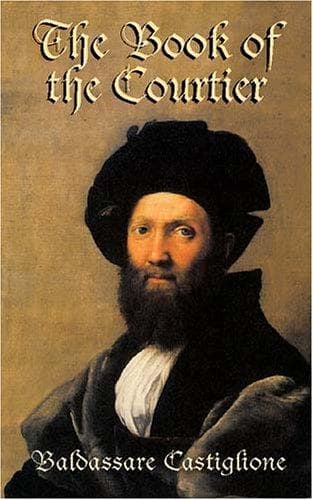
The Book of the CourtierCastiglione, Baldassarre, conte
History
The Book of the Courtier
Castiglione, Baldassarre, conte
Courtesy -- Early works to 1800; Courts and courtiers -- Early works to 1800
“Akin to this is the giving of friendly admonition in the form of
advice, yet covertly. As Cosimo de’ Medici did to one of his friends,
who was very rich but of moderate education and who had secured through
Cosimo a mission away from Florence. When on setting out the man asked
Cosimo what course he thought ought to be taken in order to do well in
the mission, Cosimo replied: ‘Wear rose-colour,[287] and say little.’ Of
the same kind was what Count Ludovico said to a man who wished to travel
incognito through a certain dangerous place and knew not how to disguise
himself; and being asked about it, the count replied: ‘Dress like a
doctor or some other man of sense.’ Again, Gianotto de’ Pazzi[288] said
to someone who wished to make a jerkin of as varied colours as he could
find: ‘Imitate the Cardinal of Pavia in word and deed.’
79.—“We laugh also at some things that have no connection. As when
someone said the other day to messer Antonio Rizzo[289] about a certain
man from Forli: ‘You may know he is a fool, for his name is
Bartolommeo.’ And another: ‘You are looking for a Master Stall, and have
no horses!’ And: ‘All the fellow lacks is money and brains.’
“And we laugh at certain other things that seem to have sequence. As
recently, when a friend of ours was suspected of having had the
renunciation[290] of a benefice forged, upon another priest’s falling
sick, Antonio Torello[291] said to our friend: ‘Why do you delay to send
for that notary of yours and see about filching this other benefice?’
Likewise at some things that have no sequence. As the other day, when
the pope sent for messer Gianluca da Pontremolo and messer Domenico
dalla Porta (who are both hunchbacks as you know),[292] and made them
auditors, saying that he wished to set the Wheel right,—messer Latino
Giovenale[293] said: ‘His Holiness is in errour if he thinks to make the
Wheel right with two wrongs (_due torti_).’
80.—“We often laugh also when a man admits everything that is said to
him and more too, but pretends to take it in a different sense. As when
Captain Peralta was brought out to fight a duel with Aldana, and Captain
Molart[294] (who was Aldana’s second) asked Peralta on his oath if he
wore any amulets or charms to keep him from being wounded; Peralta swore
that he wore no amulets or charms or relics or objects of devotion in
which he had faith. Whereupon, to taunt him with being a heretic, Molart
said: ‘Do not trouble yourself about it, for without your oath I believe
you have no faith in Christ himself.’[295]
Public-domain text, read in full here on John Shaqi.
Reviews
Reviews
No reviews yet
Be the first to share your thoughts on this work.
Elsewhere in the archive
Join the Discussion
Join the discussion
Sign in to leave a comment or review.
Sign InorCreate an account