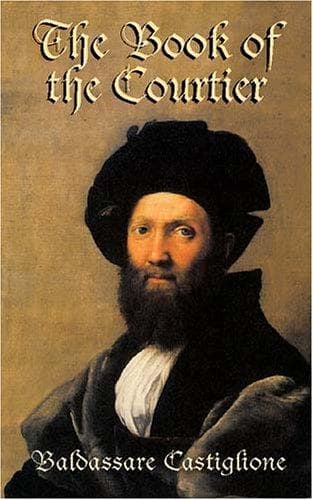
The Book of the CourtierCastiglione, Baldassarre, conte
History
The Book of the Courtier
Castiglione, Baldassarre, conte
Courtesy -- Early works to 1800; Courts and courtiers -- Early works to 1800
“So, to avoid such grievous errours as these, perhaps it was well to
teach them first how to make choice of a man who shall deserve to be
loved, and then how to love him; which is not needful in the case of
men, who know it but too well of themselves. And here I can be a good
witness; for love was never taught me save by the divine beauty and
divinest behaviour of a Lady whom it was beyond my power not to adore,
wherein I had no need of art or any master;[425] and I think that the
same happens with all who love truly. Hence it were fitting to teach the
Courtier how to make himself loved rather than how to love.”
61.—Here my lady Emilia said:
“Then discourse of this now, my lord Unico.”
The Unico replied:
“Methinks reason would require that ladies’ favour should be won by
serving and pleasing them; but by what they deem themselves served and
pleased, I think must needs be learned from ladies themselves, who often
desire things so strange that there is no man who would imagine the
same, and sometimes they do not themselves know what they desire. Hence
it is right that you, my Lady, who are a woman and so must surely know
what pleases women, should undertake this task, to do the world so great
a benefit.”
Then my lady Emilia said:
“The very great favour that you always find with women is good proof
that you know all the ways by which their grace is won; hence it is
quite fitting that you should teach them.”
“My Lady,” replied the Unico, “I could give a lover no more useful
warning than to look to it that you have no influence over the lady
whose favour he seeks; for such good qualities as the world once thought
were in me, together with the sincerest love that ever was, have not had
so much power to make me loved as you have to make me hated.”
62.—Then my lady Emilia replied:
“My lord Unico, God forbid that I should even think, much less do,
anything to make you hated; for besides doing what I ought not, I should
be esteemed of little sense for attempting the impossible. But since you
urge me thus to speak of that which pleases women, I will speak; and if
you shall be displeased, blame yourself for it.
“I think, then, that whoever would be loved must love and be lovable;
and that these two things suffice to win women’s favour.
Public-domain text, read in full here on John Shaqi.
Reviews
Reviews
No reviews yet
Be the first to share your thoughts on this work.
Elsewhere in the archive
Join the Discussion
Join the discussion
Sign in to leave a comment or review.
Sign InorCreate an account