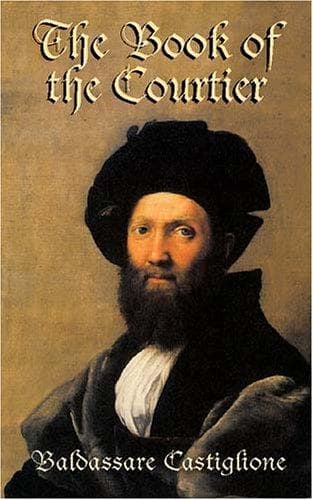
The Book of the CourtierCastiglione, Baldassarre, conte
History
The Book of the Courtier
Castiglione, Baldassarre, conte
Courtesy -- Early works to 1800; Courts and courtiers -- Early works to 1800
“Now to answer that which you accuse me of, I say that everyone knows
and sees that you are very lovable; but whether you love as sincerely as
you say, I am very much in doubt, and perhaps the others too. For your
being too lovable has brought it to pass that you have been loved by
many women: and great rivers divided into many parts become little
streams; so love, bestowed upon more than one object, has little
strength. But these continual laments of yours, and complaints of
ingratitude in the women you have served (which is not probable, in view
of your great merits), are a certain sort of mystery to hide the
favours, contentments and pleasures attained by you in love, and to
assure the women who love you and have given themselves to you, that you
will not betray them; and hence also they are content that you should
thus openly display feigned love for others to hide their real love for
you. So, if the women whom you now pretend to love are not so ready to
believe it as you would like, the reason is because this artfulness of
yours in love is beginning to be understood, not because I make you
hated.”
63.—Then my lord Unico said:
“I do not wish to try again to confute your words, because I at last
perceive that it is as much my fate not to be believed when I say truth,
as it is yours to be believed when you say untruth.”
“Say rather, my lord Unico,” replied by lady Emilia, “that you do not
love as you would have us believe; for if you loved, all your desire
would be to please your beloved lady and to wish what she wishes,
because this is the law of love; but your thus complaining of her
denotes some deceit, as I said, or indeed gives proof that you wish what
she does not wish.”
“Nay,” said my lord Unico, “indeed I wish what she wishes, which is
proof that I love her; but I complain that she does not wish what I
wish, which is a token that she loves me not, according to that same
rule that you have cited.”
My lady Emilia replied:
“He who begins to love ought also to begin to please his beloved and
bend himself wholly to her wishes, and govern his by hers; and make his
own desires her slaves, and his very soul like unto an obedient
handmaid, nor ever think of aught but to let it be transformed, if
possible, into that of his beloved, and to account this as his highest
happiness; for they do thus who love truly.”
“Assuredly,” said my lord Unico, “my highest happiness would be to have
a single wish rule her soul and mine.”
“It rests with you to have it so,” replied my lady Emilia.
64.—Then messer Bernardo interrupted and said:
Public-domain text, read in full here on John Shaqi.
Reviews
Reviews
No reviews yet
Be the first to share your thoughts on this work.
Elsewhere in the archive
Join the Discussion
Join the discussion
Sign in to leave a comment or review.
Sign InorCreate an account