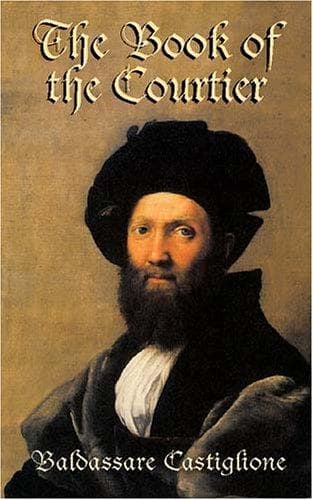
The Book of the CourtierCastiglione, Baldassarre, conte
History
The Book of the Courtier
Castiglione, Baldassarre, conte
Courtesy -- Early works to 1800; Courts and courtiers -- Early works to 1800
“That the aim of this Courtiership is difficult and sometimes
impossible, and that even when the Courtier attains it, he ought not to
be called a Courtier, but deserves a greater name,—I say that I do not
deny this difficulty, since it is not less difficult to find so
excellent a Courtier than to attain such an end. Yet methinks there is
no impossibility, even in the case that you cited: for if the Courtier
is too young to know that which we have said he ought to know, we need
not speak of him, since he is not the Courtier we are presupposing, nor
is it possible that one who has to know so many things should be very
young.
“And if, indeed, the prince shall chance to be so wise and good by
nature that he has no need of precepts and counsel from others (although
everyone knows how difficult this is), it will be enough for the
Courtier to be such a man as could make the prince virtuous if he had
need of it. And then the Courtier will be at least able to perform the
other part of his duty,—not to allow his prince to be deceived, always
to make known the truth about everything, and to set himself against
flatterers and slanderers and all those who plot to debase his prince’s
mind with unworthy pleasures. And in this way he will also attain his
end in great part, although he cannot put everything in practice: which
will not be a reason for finding fault with him, since he refrains
therefrom for so good a cause. For if an excellent physician were to
find himself in a place where everyone was in health, it would not for
that reason be right to say that this physician failed in his aim,
although he healed no sick. Thus, just as the physician’s aim ought to
be men’s health, so the Courtier’s ought to be his prince’s virtue; and
it is enough for them both to have their aim latent within their power,
if their failure to attain it openly in acts arises from the subject to
which the aim is directed.
“But if the Courtier were so old that it would not become him to
practise music, festivals, games, arms, and the other personal
accomplishments, still we cannot say that it is impossible for him to
win his prince’s favour by that road. For if his age prevents his
practising those things, it does not prevent his understanding them, and
if he has practised them in his youth, it does not prevent his having
the more perfect judgment regarding them, and his knowing the more
perfectly how to teach them to his prince, in proportion as years and
experience bring more knowledge of everything. Thus, although the old
Courtier does not practise the accomplishments ascribed to him, he will
yet attain his aim of instructing his prince rightly.
Public-domain text, read in full here on John Shaqi.
Reviews
Reviews
No reviews yet
Be the first to share your thoughts on this work.
Elsewhere in the archive
Join the Discussion
Join the discussion
Sign in to leave a comment or review.
Sign InorCreate an account