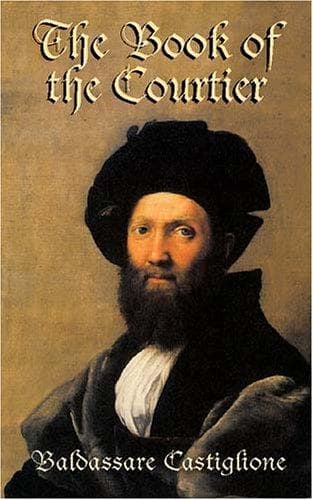
The Book of the CourtierCastiglione, Baldassarre, conte
History
The Book of the Courtier
Castiglione, Baldassarre, conte
Courtesy -- Early works to 1800; Courts and courtiers -- Early works to 1800
“Hence we must not say that beauty makes women proud or cruel, although
it may seem so to my lord Morello; nor yet ought we to ascribe to
beautiful women those enmities, deaths and destructions of which the
immoderate appetites of men are the cause. I do not by any means deny
that it is possible to find beautiful women in the world who are also
immodest, but it is not at all because their beauty inclines them to
immodesty; nay, it turns them therefrom and leads them to the path of
virtuous behaviour, by the connection that beauty has with goodness. But
sometimes evil training, the continual urgence of their lovers, gifts,
poverty, hope, deceits, fear and a thousand other causes, overcome the
steadfastness even of beautiful and good women; and through these or
similar causes beautiful men also may become wicked.”
60.—Then messer Cesare said:
“If that is true which my lord Gaspar alleged yesterday, there is no
doubt that beautiful women are more chaste than ugly women.”
“And what did I allege?” said my lord Gaspar.
Messer Cesare replied:
“If I remember rightly, you said that women who are wooed always refuse
to satisfy him who wooes them, and that those who are not wooed woo
others. Certain it is that the beautiful are always more wooed and
besought in love than are the ugly; therefore the beautiful always
refuse, and hence are more chaste than the ugly, who, not being wooed,
woo others.”
Bembo laughed, and said:
“To this argument no answer can be made.” Then he added: “It often
happens also that our sight deceives us like our other senses, and
accounts a face beautiful which in truth is not beautiful; and since in
some women’s eyes and whole aspect a certain wantonness is seen
depicted, together with unseemly blandishments,—many (who like such
manner because it promises them ease in attaining what they desire) call
it beauty: but in truth it is disguised immodesty, unworthy a name so
honoured and so sacred.”
Messer Pietro Bembo was silent, and those gentlemen still urged him to
speak further of this love and of the mode of enjoying beauty truly; and
he at last said:
“Methinks I have shown clearly enough that old men can love more happily
than young, which was my thesis; therefore it does not become me to go
further.”
Count Ludovico replied:
“You have better shown the unhappiness of youths than the happiness of
old men, whom as yet you have not taught what road to follow in this
love of theirs, but have only told them to be guided by reason; and by
many it is thought impossible for love to abide with reason.”
61.—Bembo still sought to put an end to his discourse, but my lady
Duchess begged him to speak; and he began anew thus:
Public-domain text, read in full here on John Shaqi.
Reviews
Reviews
No reviews yet
Be the first to share your thoughts on this work.
Elsewhere in the archive
Join the Discussion
Join the discussion
Sign in to leave a comment or review.
Sign InorCreate an account