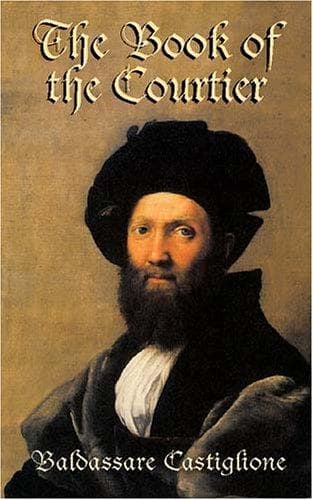
The Book of the CourtierCastiglione, Baldassarre, conte
History
The Book of the Courtier
Castiglione, Baldassarre, conte
Courtesy -- Early works to 1800; Courts and courtiers -- Early works to 1800
“Therefore let him shun the blind judgment of sense, and with his eyes
enjoy the splendour of his lady, her grace, her amourous sparkle, the
laughs, the ways and all the other pleasant ornaments of her beauty.
Likewise with his hearing let him enjoy the sweetness of her voice, the
concord of her words, the harmony of her music (if his beloved be a
musician). Thus will he feed his soul on sweetest food by means of these
two senses—which have little of the corporeal and are ministers of
reason—without passing in his desire for the body to any appetite less
than seemly.
“Next let him obey, please and honour his lady with all reverence, and
hold her dearer than himself, and prefer her convenience and pleasures
to his own, and love in her not less the beauty of mind than that of
body. Therefore let him take care not to leave her to fall into any kind
of errour, but by admonition and good advice let him always seek to lead
her on to modesty, to temperance, to true chastity, and see to it that
no thoughts find place in her except those that are pure and free from
every stain of vice; and by thus sowing virtue in the garden of her fair
mind, he will gather fruits of fairest behaviour too, and will taste
them with wonderful delight. And this will be the true engendering and
manifesting of beauty in beauty, which by some is said to be the end of
love.
“In such fashion will our Courtier be most acceptable to his lady, and
she will always show herself obedient, sweet and affable to him, and as
desirous of pleasing him as of being loved by him; and the wishes of
both will be most virtuous and harmonious, and they themselves will thus
be very happy.”
63.—Here my lord Morello said:
“To engender beauty in beauty, forsooth, would be to beget a beautiful
child in a beautiful woman; and pleasing him in this would seem to me a
much clearer token that she loved her lover than treating him with the
affability of which you speak.”
Bembo laughed, and said:
“You must not go beyond bounds, my lord Morello; nor does a woman give
small token of her love when she gives her lover her beauty, which is so
precious a thing, and by the ways that are the avenues to her soul (that
is, sight and hearing) sends the glances of her eyes, the image of her
face, her voice, her words, which strike home to the lover’s heart and
give him proof of her love.”
My lord Morello said:
“Glances and words may be, and often are, false proofs; therefore he who
has no better pledge of love is, in my judgment, far from sure; and
truly I quite expected you to make this lady of yours a little more
courteous and generous to the Courtier than my lord Magnifico made his;
but methinks that both of you are in like case with those judges who
pronounce sentence against their friends for the sake of appearing
wise.”
64.—Bembo said:
Public-domain text, read in full here on John Shaqi.
Reviews
Reviews
No reviews yet
Be the first to share your thoughts on this work.
Elsewhere in the archive
Join the Discussion
Join the discussion
Sign in to leave a comment or review.
Sign InorCreate an account