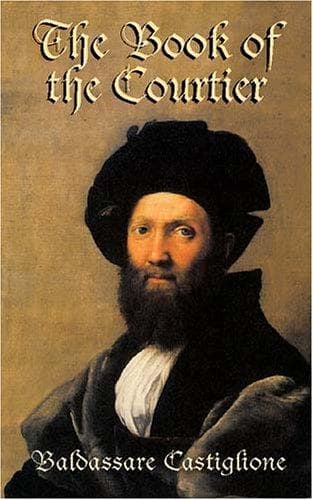
The Book of the CourtierCastiglione, Baldassarre, conte
History
The Book of the Courtier
Castiglione, Baldassarre, conte
Courtesy -- Early works to 1800; Courts and courtiers -- Early works to 1800
“Wherefore, not well content with this boon, love gives the soul a
greater felicity; for just as from the particular beauty of one body it
guides her to the universal beauty of all bodies, so in the highest
stage of perfection it guides her from the particular to the universal
intellect. Hence the soul, kindled by the most sacred fire of true
divine love, flies to unite herself with the angelic nature, and not
only quite forsakes sense, but has no longer need of reason’s discourse;
for, changed into an angel, she understands all things intelligible, and
without veil or cloud views the wide sea of pure divine beauty, and
receives it into herself, and enjoys that supreme felicity of which the
senses are incapable.
69.—“If, then, the beauties which with these dim eyes of ours we daily
see in corruptible bodies (but which are naught but dreams and faintest
shadows of beauty) seem to us so fair and gracious that they often
kindle most ardent fire in us, and of such delight that we deem no
felicity able to equal that which we sometimes feel at a single glance
coming to us from a woman’s beloved eyes,—what happy wonder, what
blessed awe, shall we think is that which fills the souls that attain to
the vision of divine beauty! What sweet flame, what delightful burning,
must that be thought which springs from the fountain of supreme and true
beauty!—which is the source of every other beauty, which never waxes nor
wanes: ever fair, and of its own self most simple in every part alike;
like only to itself, and partaking of none other; but fair in such wise
that all other fair things are fair because they derive their beauty
from it.
“This is that beauty identical with highest good, which by its light
calls and attracts all things to itself, and not only gives intellect to
the intellectual, reason to the rational, sense and desire for life to
the sensual, but to plants also and to stones communicates motion and
that natural instinct of their quality, as an imprint of itself.
“Therefore this love is as much greater and happier than the others, as
the cause that moves it is more excellent; and hence, just as material
fire refines gold, so does this most sacred fire in our souls destroy
and consume that which is mortal there, and quickens and beautifies that
celestial part which at first, by reason of the senses, was dead and
buried in them. This is the Pyre whereon the poets write that Hercules
was burned on the crest of Mount Œta, and by such burning became divine
and immortal after death.[478] This is the Burning Bush of Moses, the
Cloven Tongues of fire, the Fiery Chariot of Elias,[479] which doubles
grace and felicity in the souls of those who are worthy to behold it,
when they leave this earthly baseness and take flight towards heaven.
Public-domain text, read in full here on John Shaqi.
Reviews
Reviews
No reviews yet
Be the first to share your thoughts on this work.
Elsewhere in the archive
Join the Discussion
Join the discussion
Sign in to leave a comment or review.
Sign InorCreate an account