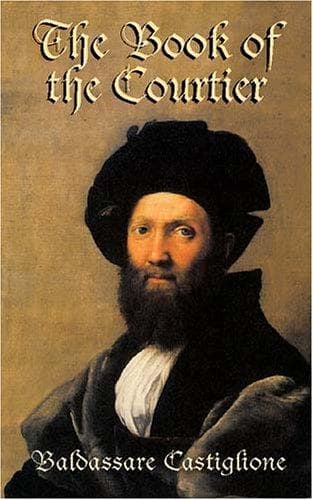
The Book of the CourtierCastiglione, Baldassarre, conte
History
The Book of the Courtier
Castiglione, Baldassarre, conte
Courtesy -- Early works to 1800; Courts and courtiers -- Early works to 1800
Note 20 page 6. More than 140 editions of THE COURTIER have been
published. Most of these are mentioned in the list printed before the
Index of this volume. A few of the editions there set down differ from
one another only in title-page; a few others, perhaps, exist only in
some bibliographer’s erroneous mention. Deductions to be made for such
reasons, however, are probably offset by other editions that the present
translator has failed to bring to light.
In the bibliographical notes appended by the brothers Volpi to their
(1733) edition, THE COURTIER is said to have been translated into
Flemish; while in his preface to the Sonzogno (1890) edition, Corio
speaks of the introduction of the book into Japan in the 17th century,
and also of a Russian translation by Archiuzow.
NOTES TO THE FIRST BOOK OF THE COURTIER
Note 21 page 7. “Courtiership” is a sadly awkward rendering of the
Italian _cortegiania_, which implies not only courtesy and courtliness,
but all the many other qualities and accomplishments essential to the
perfect Courtier or (what in Castiglione’s time was the same) the
perfect Gentleman.
Note 22 page 8. The extreme dimensions of the Duchy of Urbino were 64
miles from east to west, and 60 miles from north to south. Its
population did not much exceed 150,000.
Note 23 page 8. The first of the four dialogues is represented as having
been held on the evening of the day after the close of a certain visit
paid by Pope Julius II to Urbino on his return from a successful
campaign against Bologna. This visit is known to have lasted from 3
March to 7 March 1507. Castiglione returned from England as early as 5
March, on which date he wrote to his mother from Urbino: “We have had
his Holiness here for two days.” It seems probable that this fictitious
prolongation of his absence in England was simply a graceful excuse for
not himself appearing in the dialogues.
Note 24 page 8. There were a fief and Count of Montefeltro as early as
1154, and his son was made Count of Urbino in 1216, from which time
their male descendants ruled over a gradually increased territory until
1508, when the duchy passed to the female line. The name Montefeltro is
said to have originated in that of a temple to Jupiter Feretrius, which
in Roman times occupied the summit of the crag afterwards known as San
Leo, in the Duchy of Urbino.
Note 25 page 9. Such a rule as that of the usurping Cesare Borgia
(1502-3) can hardly have been welcome to a population accustomed to the
mild sway of the Montefeltro family.
Public-domain text, read in full here on John Shaqi.
Reviews
Reviews
No reviews yet
Be the first to share your thoughts on this work.
Elsewhere in the archive
Join the Discussion
Join the discussion
Sign in to leave a comment or review.
Sign InorCreate an account