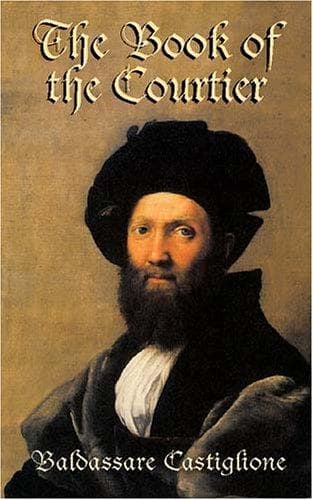
The Book of the CourtierCastiglione, Baldassarre, conte
History
The Book of the Courtier
Castiglione, Baldassarre, conte
Courtesy -- Early works to 1800; Courts and courtiers -- Early works to 1800
41.—“In this way we avoid and hide affectation, and you can now see how
opposed and destructive it is to grace in every office as well of the
body as the mind: whereof we have thus far spoken little, and yet we
must not omit it, for since the mind is of far more worth than the body,
it deserves to be more cultivated and adorned. And as to what ought to
be done in the case of our Courtier, we will lay aside the precepts of
the many sage philosophers who write of this matter and define the
properties of the mind and discuss so subtly about their rank,—and
keeping to our subject, we will in a few words declare it to be enough
that he be (as we say) an honest and upright man; for in this are
included prudence, goodness, strength and temperance of mind, and all
the other qualities that are proper to a name so honoured. And I esteem
him alone to be a true moral philosopher, who wishes to be good; and in
this regard he needs few other precepts than that wish. And therefore
Socrates was right in saying that he thought his teachings bore good
fruit indeed whenever they incited anyone to understand and teach
virtue: for they who have reached the goal of desiring nothing more
ardently than to be good, easily acquire knowledge of everything needful
therefor; so we will discuss this no further.
42.—“Yet besides goodness, I think that letters are for everyone the
true and principal ornament of the mind: although the French recognize
only the nobility of arms and esteem all else as naught. Thus they not
only fail to prize but they abhor letters, and hold all men of letters
most base, and think they speak very basely of any man when they call
him a clerk.”
[Illustration:
MONSEIGNEUR D’ANGOULÊME
AFTERWARD FRANCIS I OF FRANCE
1494-1547
]
Enlarged from a negative, specially made by Alinari through the courtesy
of Professor I. B. Supino, of an anonymous medal in the National
Museum at Florence.
Then the Magnifico Giuliano replied:
Public-domain text, read in full here on John Shaqi.
Reviews
Reviews
No reviews yet
Be the first to share your thoughts on this work.
Elsewhere in the archive
Join the Discussion
Join the discussion
Sign in to leave a comment or review.
Sign InorCreate an account