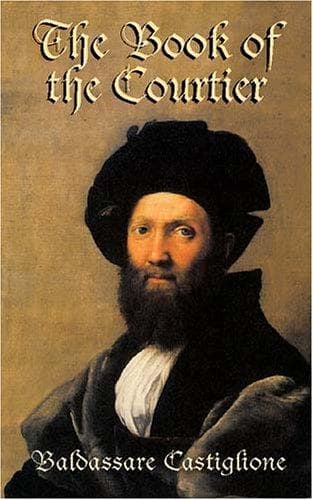
The Book of the CourtierCastiglione, Baldassarre, conte
History
The Book of the Courtier
Castiglione, Baldassarre, conte
Courtesy -- Early works to 1800; Courts and courtiers -- Early works to 1800
“Say not so,” replied the Count; “for I shall enter upon a vast sea in
praise of music. And I shall call to mind how it was always celebrated
and held sacred among the ancients, and how very sage philosophers were
of opinion that the world is composed of music, that the heavens make
harmony in their moving, and that the soul, being ordered in like
fashion, awakes and as it were revives its powers through music.
“Thus it is written that Alexander was sometimes excited by it so
passionately, that he was forced almost against his will to leave the
banquet table and rush to arms; and when the musician changed the temper
of the tune, he grew calm again, lay aside his arms, and returned to the
banquet table. Moreover I will tell you that grave Socrates learned to
play the cithern[122] at a very advanced age. And I remember having once
heard that Plato and Aristotle would have the man of culture a musician
also; and they show by a host of arguments that the power of music over
us is very great, and (for many reasons which would be too long to tell
now) that it must needs be taught from childhood, not so much for the
mere melody that we hear, but for the power it has to induce in us a
fresh and good habit of mind and an habitual tendency to virtue, which
renders the soul more capable of happiness, just as bodily exercise
renders the body more robust;[123] and that music is not only no
hindrance in the pursuits of peace and war, but is very helpful therein.
“Again, Lycurgus[124] approved of music in his harsh laws. And we read
that in their battles the very warlike Lacedemonians and Cretans used
the cithern and other dulcet instruments; that many very excellent
commanders of antiquity, like Epaminondas,[125] practised music; and
that those who were ignorant of it, like Themistocles,[126] were far
less esteemed. Have you not read that music was among the first
accomplishments which the worthy old Chiron taught Achilles in tender
youth,[127] whom he reared from the age of nurse and cradle? and that
the sage preceptor insisted that the hands which were to shed so much
Trojan blood, should be often busied with the cithern? Where is the
soldier who would be ashamed to imitate Achilles,—to say nothing of many
other famous commanders whom I could cite?
Public-domain text, read in full here on John Shaqi.
Reviews
Reviews
No reviews yet
Be the first to share your thoughts on this work.
Elsewhere in the archive
Join the Discussion
Join the discussion
Sign in to leave a comment or review.
Sign InorCreate an account