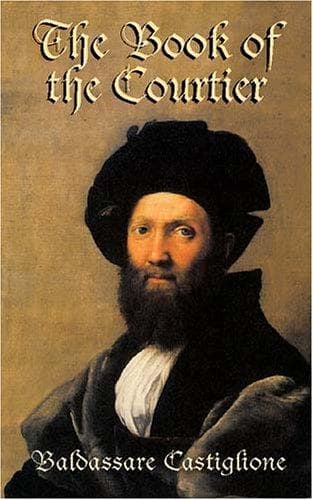
The Book of the CourtierCastiglione, Baldassarre, conte
History
The Book of the Courtier
Castiglione, Baldassarre, conte
Courtesy -- Early works to 1800; Courts and courtiers -- Early works to 1800
“And do not marvel that I desire this art, which to-day may seem to
savour of the artisan and little to befit a gentleman; for I remember
having read that the ancients, especially throughout Greece, had their
boys of gentle birth study painting in school as an honourable and
necessary thing, and it was admitted to the first rank of liberal arts;
while by public edict they forbade that it be taught to slaves. Among
the Romans too, it was held in highest honour, and the very noble family
of the Fabii took their name from it; for the first Fabius was given the
name _Pictor_, because,—being indeed a most excellent painter, and so
devoted to painting that when he painted the walls of the temple of
Health,—he inscribed his own name thereon;[131] for although he was born
of a family thus renowned and honoured with so many consular titles,
triumphs and other dignities, and although he was a man of letters and
learned in the law, and numbered among the orators,—yet he thought to
add splendour and ornament to his fame by leaving a memorial that he had
been a painter. Nor is there lack of many other men of illustrious
family, celebrated in this art; which besides being very noble and
worthy in itself, is of great utility, and especially in war for drawing
places, sites, rivers, bridges, rocks, fortresses, and the like; since
however well we may keep them in memory (which is very difficult), we
cannot show them to others.
“And truly he who does not esteem this art, seems to me very
unreasonable; for this universal fabric that we see,—with the vast
heaven so richly adorned with shining stars, and in the midst the earth
girdled by the seas, varied with mountains, valleys and rivers, and
bedecked with so many divers trees, beautiful flowers and grasses,—may
be said to be a great and noble picture, composed by the hand of nature
and of God; and whoever is able to imitate it, seems to me deserving of
great praise: nor can it be imitated without knowledge of many things,
as he knows well who tries. Hence the ancients greatly prized both the
art and the artist, which thus attained the summit of highest
excellence; very sure proof of which may be found in the antique marble
and bronze statues that yet are seen.[132] And although painting is
different from sculpture, both the one and the other spring from the
same source, which is good design. Therefore, as the statues are divine,
so we may believe the pictures were also; the more indeed because they
are susceptible of greater skill.”
50.—Then my lady Emilia turned to Giancristoforo Romano, who was sitting
with the others there, and said:
“What think you of this opinion? Do you admit that painting is
susceptible of greater skill than sculpture?”[133]
Giancristoforo replied:
“I, my Lady, think that sculpture needs more pains, more skill, and is
of greater dignity than painting.”
The Count rejoined:
Public-domain text, read in full here on John Shaqi.
Reviews
Reviews
No reviews yet
Be the first to share your thoughts on this work.
Elsewhere in the archive
Join the Discussion
Join the discussion
Sign in to leave a comment or review.
Sign InorCreate an account