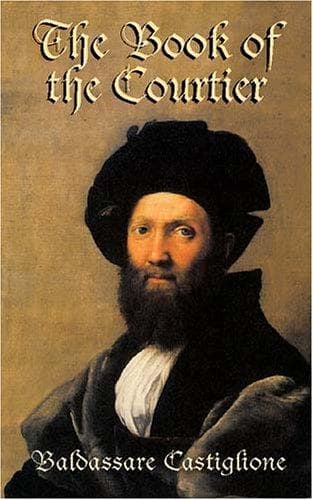
The Book of the CourtierCastiglione, Baldassarre, conte
History
The Book of the Courtier
Castiglione, Baldassarre, conte
Courtesy -- Early works to 1800; Courts and courtiers -- Early works to 1800
“You say very truly that both the one and the other are imitations of
nature; but it is not true that painting seems, and sculpture is. For
while statues are round as in life and painting is seen only on the
surface, statues lack many things that paintings do not lack, and
especially light and shade. Thus flesh has one tone and marble another;
and this the painter imitates to the life by chiaroscuro, greater or
less according to the need,—which the sculptor cannot do. And although
the painter does not make his figure round, he presents the muscles and
members rounded in such fashion as so to join the parts which are not
seen, that we can discern very well that the painter knows and
understands these also. And in this, another and greater skill is needed
to represent those members that are foreshortened and grow smaller in
proportion to the distance by reason of perspective; which, by means of
measured lines, colours, lights and shades, shows you foreground and
distance all on the single surface of an upright wall, in such
proportion as he chooses.[134] Do you really think it of small moment to
imitate the natural colours, in representing flesh or stuffs or any
other coloured thing? The sculptor certainly cannot do this, or express
the grace of black eyes or blue, with the splendour of their amourous
beams. He cannot show the colour of fair hair, or the gleam of weapons,
or a dark night, or a storm at sea, or its lightnings and thunderbolts,
or the burning of a city, or the birth of rosy dawn with its rays of
gold and purple. In short, he cannot show sky, sea, earth, mountains,
woods, meadows, gardens, rivers, cities, or houses,—all of which the
painter shows.
52.—“Therefore painting seems to me nobler and more susceptible of
skill, than sculpture. And I think that it, like other things, reached
the summit of excellence among the ancients: which still is seen in the
few slight remains that are left, especially in the grottoes of
Rome;[135] but much more clearly may it be perceived in the ancient
authors, wherein is such honoured and frequent mention both of works and
of masters, and whereby we learn how highly they were always honoured by
great lords and by commonwealths.
Public-domain text, read in full here on John Shaqi.
Reviews
Reviews
No reviews yet
Be the first to share your thoughts on this work.
Elsewhere in the archive
Join the Discussion
Join the discussion
Sign in to leave a comment or review.
Sign InorCreate an account