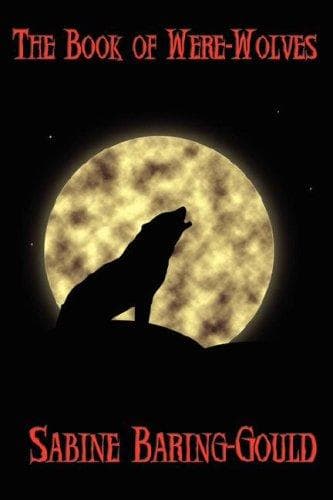
This I shall show to be an innate craving for blood implanted in
certain natures, restrained under ordinary circumstances, but breaking
forth occasionally, accompanied with hallucination, leading in most
cases to cannibalism. I shall then give instances of persons thus
afflicted, who were believed by others, and who believed themselves, to
be transformed into beasts, and who, in the paroxysms of their madness,
committed numerous murders, and devoured their victims.
I shall next give instances of persons suffering from the same passion
for blood, who murdered for the mere gratification of their natural
cruelty, but who were not subject to hallucinations, nor were addicted
to cannibalism.
I shall also give instances of persons filled with the same
propensities who murdered and ate their victims, but who were perfectly
free from hallucination.
CHAPTER II.
LYCANTHROPY AMONG THE ANCIENTS.
Definition of Lycanthropy—Marcellus
Sidetes—Virgil—Herodotus—Ovid—Pliny—Agriopas—Story from
Petronius—Arcadian Legends—Explanation offered.
What is Lycanthropy? The change of manor woman into the form of a wolf,
either through magical means, so as to enable him or her to gratify the
taste for human flesh, or through judgment of the gods in punishment
for some great offence.
This is the popular definition. Truly it consists in a form of madness,
such as may be found in most asylums.
Among the ancients this kind of insanity went by the names of
Lycanthropy, Kuanthropy, or Boanthropy, because those afflicted with it
believed themselves to be turned into wolves, dogs, or cows. But in the
North of Europe, as we shall see, the shape of a bear, and in
Africa that of a hyæna, were often selected in preference. A mere
matter of taste! According to Marcellus Sidetes, of whose poem {Greek
_perì lukanðrw’pou_} a fragment exists, men are attacked with this
madness chiefly in the beginning of the year, and become most furious
in February; retiring for the night to lone cemeteries, and living
precisely in the manner of dogs and wolves.
Virgil writes in his eighth Eclogue:—
Has herbas, atque hæc Ponto mihi lecta venena
Ipse dedit Mœris; nascuntur plurima Ponto.
His ego sæpe lupum fieri et se conducere sylvis
Mœrim, sæpe animas imis excire sepulchris,
Atque satas alio, vidi traducere messes.
And Herodotus:—“It seems that the Neuri are sorcerers, if one is to
believe the Scythians and the Greeks established in Scythia; for each
Neurian changes himself, once in the year, into the form of a wolf, and
he continues in that form for several days, after which he resumes his
former shape.”—(Lib. iv. c. 105.)
See also Pomponius Mela (lib. ii. c. 1) “There is a fixed time for each
Neurian, at which they change, if they like, into wolves, and back
again into their former condition.”
Public-domain text, read in full here on John Shaqi.
Reviews
Reviews
No reviews yet
Be the first to share your thoughts on this work.
Join the Discussion
Join the discussion
Sign in to leave a comment or review.
Sign InorCreate an account