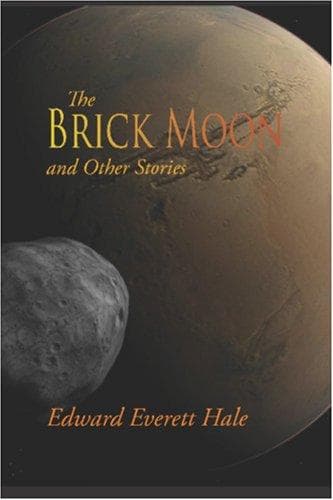
The Brick Moon, and Other StoriesHale, Edward Everett
Science
The Brick Moon, and Other Stories
Hale, Edward Everett
Short stories; United States -- Social life and customs -- 19th century -- Fiction
He had had all night since half-past ten to consider
what next was most important for them to know; and a very
difficult question it was, you will observe. They had
been gone nearly two years, and much had happened. Which
thing was, on the whole, the most interesting and
important? He had said we were all well. What then?
Did you never find yourself in the same difficulty?
When your husband had come home from sea, and kissed you
and the children, and wondered at their size, did you
never sit silent and have to think what you should say?
Were you never fairly relieved when little Phil said,
blustering, "I got three eggs to-day." The truth is,
that silence is very satisfactory intercourse, if we only
know all is well. When De Sauty got his original cable
going, he had not much to tell after all; only that
consols were a quarter per cent higher than they were
the day before. "Send me news," lisped he--poor lonely
myth!--from Bull's Bay to Valentia,--"send me news; they
are mad for news." But how if there be no news worth
sending? What do I read in my cable despatch to-day?
Only that the Harvard crew pulled at Putney yesterday,
which I knew before I opened the paper, and that there
had been a riot in Spain, which I also knew. Here is a
letter just brought me by the mail from Moreau, Tazewell
County, Iowa. It is written by Follansbee, in a good
cheerful hand. How glad I am to hear from Follansbee!
Yes; but do I care one straw whether Follansbee planted
spring wheat or winter wheat? Not I. All I care for is
Follansbee's way of telling it. All these are the
remarks by which Haliburton explains the character of the
messages he sent in reply to George Orcutt's autographs,
which were so thoroughly satisfactory.
Should he say Mr. Borie had left the Navy Department
and Mr. Robeson come in? Should he say the Lords had
backed down on the Disendowment Bill? Should he say the
telegraph had been landed at Duxbury? Should he say
Ingham had removed to Tamworth? What did they care for
this? What does anybody ever care for facts? Should he
say that the State Constable was enforcing the liquor law
on whiskey, but was winking at lager? All this would
take him a week, in the most severe condensation,--
and for what good? as Haliburton asked. Yet these were
the things that the newspapers told, and they told
nothing else. There was a nice little poem of Jean
Ingelow's in a Transcript Haliburton had with him. He
said he was really tempted to spell that out. It was
better worth it than all the rest of the newspaper stuff,
and would be remembered a thousand years after that was
forgotten. "What they wanted," says Haliburton, "was
sentiment. That is all that survives and is eternal."
So he and Rob. laid out their cambric thus:--
RAW. AL WEL. SO GLAD.
Public-domain text, read in full here on John Shaqi.
Reviews
Reviews
No reviews yet
Be the first to share your thoughts on this work.
Join the Discussion
Join the discussion
Sign in to leave a comment or review.
Sign InorCreate an account