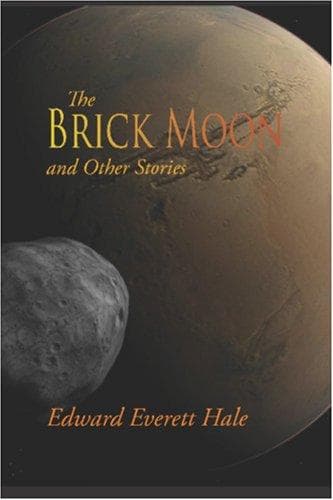
The Brick Moon, and Other StoriesHale, Edward Everett
Science
The Brick Moon, and Other Stories
Hale, Edward Everett
Short stories; United States -- Social life and customs -- 19th century -- Fiction
The women have never had any misunderstandings. When
we had received two or three hundred despatches from B.
M., Annie Haliburton came to me and said, in that pretty
way of hers, that she thought they had a right to their
turn again. She said this lore about the Albert Nyanza
and the North Pole was all very well, but, for her part,
she wanted to know how they lived, what they did, and
what they talked about, whether they took summer
journeys, and how and what was the form of society where
thirty-seven people lived in such close quarters. This
about "the form of society" was merely wool pulled over
my eyes. So she said she thought her husband and I had
better go off to the Biennial Convention at Assampink, as
she knew we wanted to do, and she and Bridget and
Polly and Cordelia would watch for the signals, and would
make the replies. She thought they would get on better
if we were out of the way.
So we went to the convention, as she called it, which
was really not properly a convention, but the Forty-fifth
Biennial General Synod, and we left the girls to their
own sweet way.
Shall I confess that they kept no record of their own
signals, and did not remember very accurately what they
were? "I was not going to keep a string of `says I's'
and `says she's,'" said Polly, boldly. "it shall not be
written on my tomb that I have left more annals for
people to file or study or bind or dust or catalogue."
But they told us that they had begun by asking the
"bricks" if they remembered what Maria Theresa said to
her ladies-in-waiting.[1] Quicker than any signal had
ever been answered, George Orcutt's party replied from
the Moon, "We hear, and we obey." Then the women-kind
had it all to themselves. The brick-women explained at
once to our girls that they had sent their men round to
the other side to cut ice, and that they were manning the
telescope, and running the signals for themselves, and
that they could have a nice talk without any bother about
the law-books or the magnetic pole. As I say, I do
not know what questions Polly and Annie put; but--to give
them their due--they had put on paper a coherent record
of the results arrived at in the answers; though, what
were the numbers of the despatches, or in what order they
came, I do not know; for the session of the synod kept us
at Assampink for two or three weeks
[1] Maria Theresa's husband, Francis, Duke of
Tuscany, was hanging about loose one day, and the
Empress, who had got a little tired, said to the maids of
honor, "Girls, whenever you marry, take care and choose
a husband who has something to do outside of the house."
Public-domain text, read in full here on John Shaqi.
Reviews
Reviews
No reviews yet
Be the first to share your thoughts on this work.
Join the Discussion
Join the discussion
Sign in to leave a comment or review.
Sign InorCreate an account