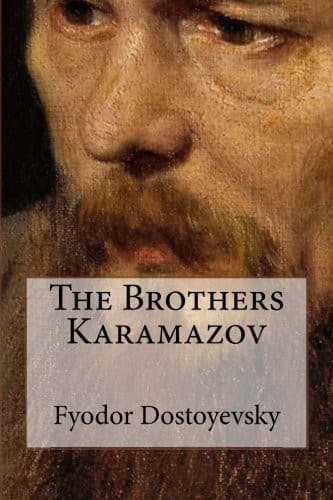
Brothers -- Fiction; Didactic fiction; Fathers and sons -- Fiction; Russia -- Social life and customs -- 1533-1917 -- Fiction
“‘It’s wonderful how you can turn words,’ as Polonius says in
_Hamlet_,” laughed Ivan. “You turn my words against me. Well, I am
glad. Yours must be a fine God, if man created Him in his image and
likeness. You asked just now what I was driving at. You see, I am fond
of collecting certain facts, and, would you believe, I even copy
anecdotes of a certain sort from newspapers and books, and I’ve already
got a fine collection. The Turks, of course, have gone into it, but
they are foreigners. I have specimens from home that are even better
than the Turks. You know we prefer beating—rods and scourges—that’s our
national institution. Nailing ears is unthinkable for us, for we are,
after all, Europeans. But the rod and the scourge we have always with
us and they cannot be taken from us. Abroad now they scarcely do any
beating. Manners are more humane, or laws have been passed, so that
they don’t dare to flog men now. But they make up for it in another way
just as national as ours. And so national that it would be practically
impossible among us, though I believe we are being inoculated with it,
since the religious movement began in our aristocracy. I have a
charming pamphlet, translated from the French, describing how, quite
recently, five years ago, a murderer, Richard, was executed—a young
man, I believe, of three and twenty, who repented and was converted to
the Christian faith at the very scaffold. This Richard was an
illegitimate child who was given as a child of six by his parents to
some shepherds on the Swiss mountains. They brought him up to work for
them. He grew up like a little wild beast among them. The shepherds
taught him nothing, and scarcely fed or clothed him, but sent him out
at seven to herd the flock in cold and wet, and no one hesitated or
scrupled to treat him so. Quite the contrary, they thought they had
every right, for Richard had been given to them as a chattel, and they
did not even see the necessity of feeding him. Richard himself
describes how in those years, like the Prodigal Son in the Gospel, he
longed to eat of the mash given to the pigs, which were fattened for
sale. But they wouldn’t even give him that, and beat him when he stole
from the pigs. And that was how he spent all his childhood and his
youth, till he grew up and was strong enough to go away and be a thief.
The savage began to earn his living as a day laborer in Geneva. He
drank what he earned, he lived like a brute, and finished by killing
and robbing an old man. He was caught, tried, and condemned to death.
They are not sentimentalists there. And in prison he was immediately
surrounded by pastors, members of Christian brotherhoods, philanthropic
ladies, and the like. They taught him to read and write in prison, and
expounded the Gospel to him. They exhorted him, worked upon him,
drummed at him incessantly, till at last he solemnly confessed his
crime. He was converted. He wrote to the court himself that he was a
Public-domain text, read in full here on John Shaqi.
Reviews
Reviews
No reviews yet
Be the first to share your thoughts on this work.
Elsewhere in the archive
Join the Discussion
Join the discussion
Sign in to leave a comment or review.
Sign InorCreate an account