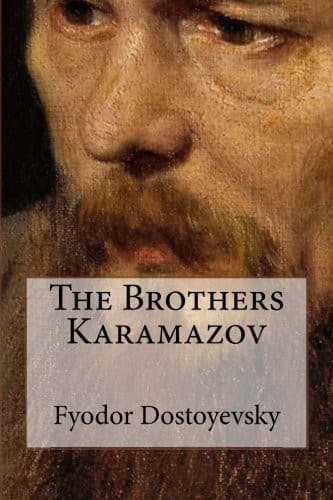
Brothers -- Fiction; Didactic fiction; Fathers and sons -- Fiction; Russia -- Social life and customs -- 1533-1917 -- Fiction
monster, but that in the end God had vouchsafed him light and shown
grace. All Geneva was in excitement about him—all philanthropic and
religious Geneva. All the aristocratic and well-bred society of the
town rushed to the prison, kissed Richard and embraced him; ‘You are
our brother, you have found grace.’ And Richard does nothing but weep
with emotion, ‘Yes, I’ve found grace! All my youth and childhood I was
glad of pigs’ food, but now even I have found grace. I am dying in the
Lord.’ ‘Yes, Richard, die in the Lord; you have shed blood and must
die. Though it’s not your fault that you knew not the Lord, when you
coveted the pigs’ food and were beaten for stealing it (which was very
wrong of you, for stealing is forbidden); but you’ve shed blood and you
must die.’ And on the last day, Richard, perfectly limp, did nothing
but cry and repeat every minute: ‘This is my happiest day. I am going
to the Lord.’ ‘Yes,’ cry the pastors and the judges and philanthropic
ladies. ‘This is the happiest day of your life, for you are going to
the Lord!’ They all walk or drive to the scaffold in procession behind
the prison van. At the scaffold they call to Richard: ‘Die, brother,
die in the Lord, for even thou hast found grace!’ And so, covered with
his brothers’ kisses, Richard is dragged on to the scaffold, and led to
the guillotine. And they chopped off his head in brotherly fashion,
because he had found grace. Yes, that’s characteristic. That pamphlet
is translated into Russian by some Russian philanthropists of
aristocratic rank and evangelical aspirations, and has been distributed
gratis for the enlightenment of the people. The case of Richard is
interesting because it’s national. Though to us it’s absurd to cut off
a man’s head, because he has become our brother and has found grace,
yet we have our own speciality, which is all but worse. Our historical
pastime is the direct satisfaction of inflicting pain. There are lines
in Nekrassov describing how a peasant lashes a horse on the eyes, ‘on
its meek eyes,’ every one must have seen it. It’s peculiarly Russian.
He describes how a feeble little nag has foundered under too heavy a
load and cannot move. The peasant beats it, beats it savagely, beats it
at last not knowing what he is doing in the intoxication of cruelty,
thrashes it mercilessly over and over again. ‘However weak you are, you
must pull, if you die for it.’ The nag strains, and then he begins
lashing the poor defenseless creature on its weeping, on its ‘meek
eyes.’ The frantic beast tugs and draws the load, trembling all over,
gasping for breath, moving sideways, with a sort of unnatural spasmodic
action—it’s awful in Nekrassov. But that’s only a horse, and God has
given horses to be beaten. So the Tatars have taught us, and they left
us the knout as a remembrance of it. But men, too, can be beaten. A
well-educated, cultured gentleman and his wife beat their own child
with a birch-rod, a girl of seven. I have an exact account of it. The
Public-domain text, read in full here on John Shaqi.
Reviews
Reviews
No reviews yet
Be the first to share your thoughts on this work.
Elsewhere in the archive
Join the Discussion
Join the discussion
Sign in to leave a comment or review.
Sign InorCreate an account