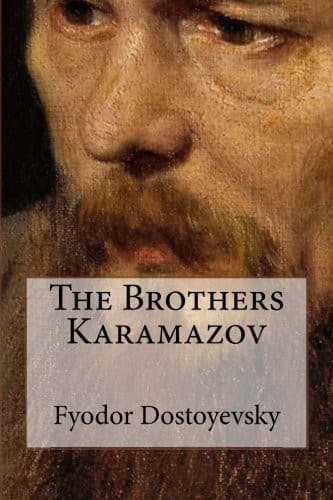
Brothers -- Fiction; Didactic fiction; Fathers and sons -- Fiction; Russia -- Social life and customs -- 1533-1917 -- Fiction
The discussion died down for a moment, but the elder, seating himself
in his former place, looked at them all as though cordially inviting
them to go on. Alyosha, who knew every expression of his face, saw that
he was fearfully exhausted and making a great effort. Of late he had
been liable to fainting fits from exhaustion. His face had the pallor
that was common before such attacks, and his lips were white. But he
evidently did not want to break up the party. He seemed to have some
special object of his own in keeping them. What object? Alyosha watched
him intently.
“We are discussing this gentleman’s most interesting article,” said
Father Iosif, the librarian, addressing the elder, and indicating Ivan.
“He brings forward much that is new, but I think the argument cuts both
ways. It is an article written in answer to a book by an ecclesiastical
authority on the question of the ecclesiastical court, and the scope of
its jurisdiction.”
“I’m sorry I have not read your article, but I’ve heard of it,” said
the elder, looking keenly and intently at Ivan.
“He takes up a most interesting position,” continued the Father
Librarian. “As far as Church jurisdiction is concerned he is apparently
quite opposed to the separation of Church from State.”
“That’s interesting. But in what sense?” Father Zossima asked Ivan.
The latter, at last, answered him, not condescendingly, as Alyosha had
feared, but with modesty and reserve, with evident goodwill and
apparently without the slightest _arrière-pensée_.
“I start from the position that this confusion of elements, that is, of
the essential principles of Church and State, will, of course, go on
for ever, in spite of the fact that it is impossible for them to
mingle, and that the confusion of these elements cannot lead to any
consistent or even normal results, for there is falsity at the very
foundation of it. Compromise between the Church and State in such
questions as, for instance, jurisdiction, is, to my thinking,
impossible in any real sense. My clerical opponent maintains that the
Church holds a precise and defined position in the State. I maintain,
on the contrary, that the Church ought to include the whole State, and
not simply to occupy a corner in it, and, if this is, for some reason,
impossible at present, then it ought, in reality, to be set up as the
direct and chief aim of the future development of Christian society!”
“Perfectly true,” Father Païssy, the silent and learned monk, assented
with fervor and decision.
“The purest Ultramontanism!” cried Miüsov impatiently, crossing and
recrossing his legs.
Public-domain text, read in full here on John Shaqi.
Reviews
Reviews
No reviews yet
Be the first to share your thoughts on this work.
Join the Discussion
Join the discussion
Sign in to leave a comment or review.
Sign InorCreate an account