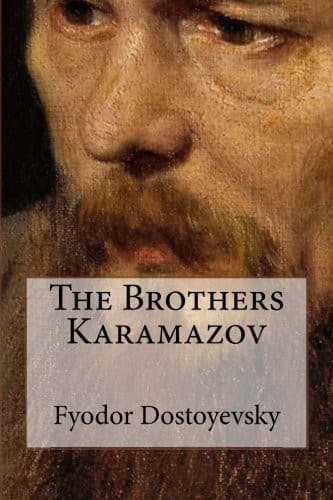
Brothers -- Fiction; Didactic fiction; Fathers and sons -- Fiction; Russia -- Social life and customs -- 1533-1917 -- Fiction
It happened moreover that the child’s relations on his mother’s side
forgot him too at first. His grandfather was no longer living, his
widow, Mitya’s grandmother, had moved to Moscow, and was seriously ill,
while his daughters were married, so that Mitya remained for almost a
whole year in old Grigory’s charge and lived with him in the servant’s
cottage. But if his father had remembered him (he could not, indeed,
have been altogether unaware of his existence) he would have sent him
back to the cottage, as the child would only have been in the way of
his debaucheries. But a cousin of Mitya’s mother, Pyotr Alexandrovitch
Miüsov, happened to return from Paris. He lived for many years
afterwards abroad, but was at that time quite a young man, and
distinguished among the Miüsovs as a man of enlightened ideas and of
European culture, who had been in the capitals and abroad. Towards the
end of his life he became a Liberal of the type common in the forties
and fifties. In the course of his career he had come into contact with
many of the most Liberal men of his epoch, both in Russia and abroad.
He had known Proudhon and Bakunin personally, and in his declining
years was very fond of describing the three days of the Paris
Revolution of February 1848, hinting that he himself had almost taken
part in the fighting on the barricades. This was one of the most
grateful recollections of his youth. He had an independent property of
about a thousand souls, to reckon in the old style. His splendid estate
lay on the outskirts of our little town and bordered on the lands of
our famous monastery, with which Pyotr Alexandrovitch began an endless
lawsuit, almost as soon as he came into the estate, concerning the
rights of fishing in the river or wood-cutting in the forest, I don’t
know exactly which. He regarded it as his duty as a citizen and a man
of culture to open an attack upon the “clericals.” Hearing all about
Adelaïda Ivanovna, whom he, of course, remembered, and in whom he had
at one time been interested, and learning of the existence of Mitya, he
intervened, in spite of all his youthful indignation and contempt for
Fyodor Pavlovitch. He made the latter’s acquaintance for the first
time, and told him directly that he wished to undertake the child’s
education. He used long afterwards to tell as a characteristic touch,
that when he began to speak of Mitya, Fyodor Pavlovitch looked for some
time as though he did not understand what child he was talking about,
and even as though he was surprised to hear that he had a little son in
the house. The story may have been exaggerated, yet it must have been
something like the truth.
Public-domain text, read in full here on John Shaqi.
Reviews
Reviews
No reviews yet
Be the first to share your thoughts on this work.
Join the Discussion
Join the discussion
Sign in to leave a comment or review.
Sign InorCreate an account