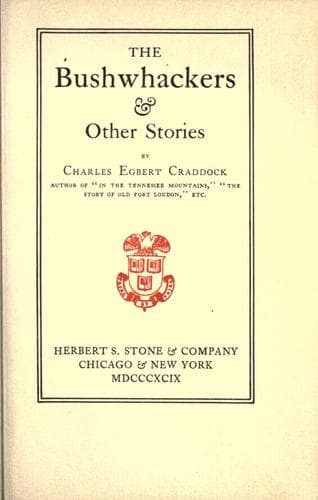
The bushwhackers & other storiesCraddock, Charles Egbert
General
The bushwhackers & other stories
Craddock, Charles Egbert
Mountain life -- Fiction; Tennessee -- Social life and customs -- Fiction
Hilary remembered that moment always. It meant so much to him. Every
detail of the scene was painted on his memory years and years afterward
as if but yesterday it was aglow--the evening air that was so still,
so filled with mellow, illuminated color, so imbued with peace and
fragrance and soft content, such as one could imagine may pervade the
realms of Paradise, was yet the vehicle for the limning of this warlike
picture. The great purple mountains loomed high around; through the
green valley now crept a dun-tinted shadow more like a deepening of the
rich verdant color of the foliage than a visible transition toward the
glooms of the night; the stream was steel-gray and full of the white
flickers of foam; further up the water reflected a flare of camp-fires,
broadly aglow, with great sprangles of fluctuating flame and smoke
setting the blue dusk a-quiver with alternations of light and shade;
there were the dim rows of horses, some still sturdily champing their
provender, others dully drowsing, and one nearer at hand, a noble
charger, standing with uplifted neck and thin, expanded nostrils and
full lustrous eyes, gazing over the winding way, the vacant road by
which they had come. Beyond were the figures of the soldiers; a few,
who had already finished their supper, were rolled in their blankets
with their feet to the fire in a circle like the spokes of a wheel
to the hub. There, pillowed on their saddles, would they sleep all
night under the pulsating white stars, for these swift raids were
unencumbered with baggage, and the pitching of a tent meant a longer
stay than the bivouac of a single night. Others were still at their
supper, broiling rashers of bacon on the coals, or toasting a bird or
chicken, split and poised on a pointed cedar stick before the flames.
Socially disposed groups were laughing and talking beside the flaring
brands, the firelight gleaming in their eyes, half shaded by the wide,
drooping brims of their broad hats, and flashing on their white teeth
as they rehearsed the incidents of the day or made merry with old
scores. Now and then a stave of song would rise sonorously into the
air as a big bass voice trolled out a popular melody--it was the first
time Hilary had ever heard the sentimental, melancholy measures of
“The Sun’s Low Down the Sky, Lorena.” Sometimes, by way of symphony, a
tentative staccato variation of the theme would issue from the strings
of a violin, borrowed from a neighboring dwelling, which a young
trooper, seated leaning against the bole of a great tree, was playing
with a deft, assured touch.
Hilary often saw such scenes afterward, but not even the reality
was ever so vivid as the recollection of this fire-lit perspective
glimmering behind the figure of the guard.
Public-domain text, read in full here on John Shaqi.
Reviews
Reviews
No reviews yet
Be the first to share your thoughts on this work.
Join the Discussion
Join the discussion
Sign in to leave a comment or review.
Sign InorCreate an account