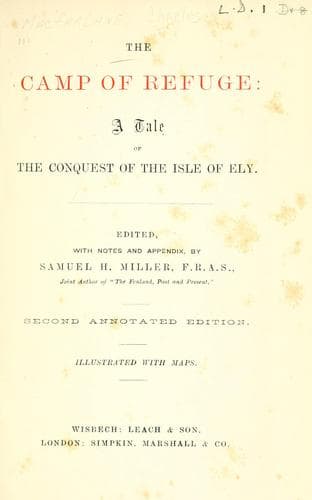
The Camp of Refuge: A Tale of the Conquest of the Isle of ElyMacFarlane, Charles
History
The Camp of Refuge: A Tale of the Conquest of the Isle of Ely
MacFarlane, Charles
Great Britain -- History -- Medieval period, 1066-1485 -- Fiction
From Peterborough the Lord of Brunn made one good march across the fen
country to Crowland, where he saluted the good Abbat and brotherhood,
who had put their house into excellent order. And having tarried for a
short season with the trusty monks of Crowland, he went down the river
Welland unto Spalding, where he embarked the treasure which he had
taken, and sent Girolamo of Salerno to have charge of it and see it
safely delivered to the Lord Abbat of Ely.[179] Having done all this,
and having seen that the river Welland and the country about Crowland
and Spalding were well guarded, Hereward went across the country to
Brunn to visit his fair wife, whom he had not seen since the quinquaine
of Pasche. Elfric went with him, and in this manner there were two
happy meetings. The old manor-house at Brunn had been beautified as
well as strengthened under the eye of the Ladie Alftrude; and the old
township, being ridded of the Normans, was beginning to look peaceful
and prosperous as it used to do in the happy times of the good Lord
Leofric of blessed memory. The unthinking people were already
forgetting their past troubles, and beginning to imagine that there
would be no troubles for the future, or that, come what might the
Normans would never get footing again in the fen country. Elfric was
not an unthinking young man, but his love for Maid Mildred caused him
to take up the notion of the townfolk. He thought he might soon turn
his sword into a reaping-hook, and that it was already time for keeping
the promise which his master had made to him. Mildred said nay, nay,
but in a manner which sounded very like yea, yea. Lord Hereward said,
“Wait awhile; ye are both young, and this war is not over. Beyond the
fens the Normans are still triumphant, and the Saxons confounded and
submissive. Elfric, there is work to do, and short is the time that I
can abide here.”
Public-domain text, read in full here on John Shaqi.
Reviews
Reviews
No reviews yet
Be the first to share your thoughts on this work.
Elsewhere in the archive
Join the Discussion
Join the discussion
Sign in to leave a comment or review.
Sign InorCreate an account