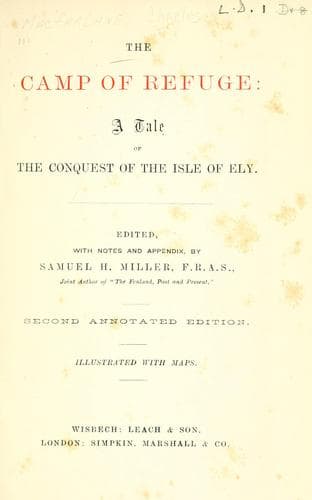
The Camp of Refuge: A Tale of the Conquest of the Isle of ElyMacFarlane, Charles
History
The Camp of Refuge: A Tale of the Conquest of the Isle of Ely
MacFarlane, Charles
Great Britain -- History -- Medieval period, 1066-1485 -- Fiction
Matters were in this good train in the camp when intelligence was
brought that Knut, with the whole of his mighty fleet, had returned to
the Wash. The Danish faction, or all those Saxon lords who counted more
upon Danish assistance than upon their own valour and the valour of
their countrymen, were greatly rejoiced at these tidings, and would not
allow any man to doubt that Knut, having made good seizings and spoils,
was now come to co-operate with the English warriors and their great
captain the Lord of Brunn; and these unwise lords, being partly guided
or misguided by traitors, outvoted the Lord Abbat, and sent down a
deputation to Lynn to salute and welcome the royal Dane, and to invite
him and escort him to Ely. And this time Knut was nothing loth to come:
and he came up the river with a part of his fleet of ships and with
many of his jarls and most famed warriors. Crowned kings had visited
the great house of Ely before now, and kings of the Danish as well as
of the Saxon line, but to none of them had there been given a more
splendid feast than was now given to Knut, who as yet was but a jarl
and a king’s son. The Saxon dames of high name and beauty came in from
the Camp of Refuge, or from houses in the township of Ely, or in
circumjacent hamlets, to welcome the princely stranger and adorn the
festival; and fairest among these fair was Alftrude, the young wife of
the Lord of Brunn. The Lord Hereward himself was there, but much less
cheerful and festive than was his wont; for on his last sally from the
fens he had heard more than he knew before of the evil doings of the
Dane; and, moreover, he had ever suspected their good faith.
When the feasting was over, the cunning old Dane, that had come up to
Ely before as envoy from the prince, began to relate what great
mischief Knut had done to Duke William, and what great service he had
rendered to the House of Ely and the Camp of Refuge, and the whole fen
country, by the diversion he had made with his ships; and before any of
the Saxon lords could reply or make any observation upon these his
words, the astute Dane asked whether the festivals of Saint Sexburga
and Saint Withburga had been well attended by pilgrims, and whether the
shrine-boxes had had a good replenishing? The chamberlain, who ought
not to have spoken before his superior the Lord Abbat, said that the
festivals had been thronged, and that, considering the troublesome
times, the donations of the pilgrims had been liberal.
“That is well,” said the old fox, “for our ships have had much wear and
tear, and stand in need of repairs; and the prince wants some gold and
silver to pay his seamen and his fighting men, who are growing weary
and dissatisfied for want of pay.”
Public-domain text, read in full here on John Shaqi.
Reviews
Reviews
No reviews yet
Be the first to share your thoughts on this work.
Elsewhere in the archive
Join the Discussion
Join the discussion
Sign in to leave a comment or review.
Sign InorCreate an account