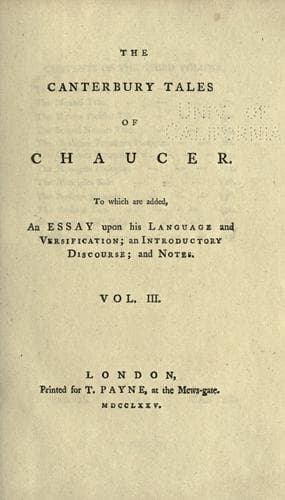
The Canterbury Tales, and Other PoemsChaucer, Geoffrey
ReligionChristian
The Canterbury Tales, and Other Poems
Chaucer, Geoffrey
Chaucer, Geoffrey, -1400; Christian pilgrims and pilgrimages -- Poetry; English poetry -- Middle English, 1100-1500
No wight her handes might off it arace,* *pluck away by force
Till she was slain right in the selfe* place. *same
Now since that maidens hadde such despite
To be defouled with man’s foul delight,
Well ought a wife rather herself to sle,* *slay
Than be defouled, as it thinketh me.
What shall I say of Hasdrubale’s wife,
That at Carthage bereft herself of life?
For, when she saw the Romans win the town,
She took her children all, and skipt adown
Into the fire, and rather chose to die,
Than any Roman did her villainy.
Hath not Lucretia slain herself, alas!
At Rome, when that she oppressed* was *ravished
Of Tarquin? for her thought it was a shame
To live, when she hadde lost her name.
The seven maidens of Milesie also
Have slain themselves for very dread and woe,
Rather than folk of Gaul them should oppress.
More than a thousand stories, as I guess,
Could I now tell as touching this mattere.
When Abradate was slain, his wife so dear <23>
Herselfe slew, and let her blood to glide
In Abradate’s woundes, deep and wide,
And said, ‘My body at the leaste way
There shall no wight defoul, if that I may.’
Why should I more examples hereof sayn?
Since that so many have themselves slain,
Well rather than they would defouled be,
I will conclude that it is bet* for me *better
To slay myself, than be defouled thus.
I will be true unto Arviragus,
Or elles slay myself in some mannere,
As did Demotione’s daughter dear,
Because she woulde not defouled be.
O Sedasus, it is full great pity
To reade how thy daughters died, alas!
That slew themselves *for suche manner cas.* *in circumstances of
As great a pity was it, or well more, the same kind*
The Theban maiden, that for Nicanor
Herselfe slew, right for such manner woe.
Another Theban maiden did right so;
For one of Macedon had her oppress’d,
She with her death her maidenhead redress’d.* *vindicated
What shall I say of Niceratus’ wife,
That for such case bereft herself her life?
How true was eke to Alcibiades
His love, that for to dien rather chese,* *chose
Than for to suffer his body unburied be?
Lo, what a wife was Alceste?” quoth she.
“What saith Homer of good Penelope?
All Greece knoweth of her chastity.
Pardie, of Laedamia is written thus,
That when at Troy was slain Protesilaus, <24>
No longer would she live after his day.
The same of noble Porcia tell I may;
Withoute Brutus coulde she not live,
To whom she did all whole her hearte give. <25>
The perfect wifehood of Artemisie <26>
Honoured is throughout all Barbarie.
O Teuta <27> queen, thy wifely chastity
To alle wives may a mirror be.” <28>
Public-domain text, read in full here on John Shaqi.
Reviews
Reviews
No reviews yet
Be the first to share your thoughts on this work.
Elsewhere in the archive
Join the Discussion
Join the discussion
Sign in to leave a comment or review.
Sign InorCreate an account