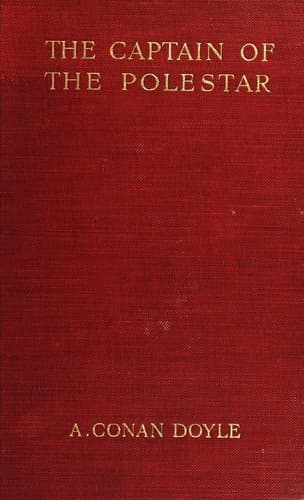
The Captain of the Polestar, and Other TalesDoyle, Arthur Conan
General
The Captain of the Polestar, and Other Tales
Doyle, Arthur Conan
Great Britain -- Social life and customs -- 19th century -- Fiction; Short stories, English
Early next morning he was up and down on the wharf listening to the
talk of the west-country sailors. Every word they spoke seemed to him to
revive his memory and bring him nearer to the light. From time to time
they paused in their work, and seeing the white-haired stranger sitting
so silently and attentively, they laughed at him and broke little jests
upon him. And even these jests had a familiar sound to the exile, as
they very well might, seeing that they were the same which he had heard
in his youth, for no one ever makes a new joke in England. So he sat
through the long day, bathing himself in the west-country speech, and
waiting for the light to break.
And it happened that when the sailors broke off for their mid-day meal,
one of them, either out of curiosity or good nature, came over to the
old watcher and greeted him. So John asked him to be seated on a log by
his side, and began to put many questions to him about the country from
which he came, and the town. All which the man answered glibly enough,
for there is nothing in the world that a sailor loves to talk of so much
as of his native place, for it pleases him to show that he is no mere
wanderer, but that he has a home to receive him whenever he shall choose
to settle down to a quiet life. So the seaman prattled away about the
Town Hall and the Martello Tower, and the Esplanade, and Pitt Street and
the High Street, until his companion suddenly shot out a long eager arm
and caught him by the wrist. “Look here, man,” he said, in a low quick
whisper. “Answer me truly as you hope for mercy. Are not the streets
that run out of the High Street, Fox Street, Caroline Street, and George
Street, in the order named?” “They are,” the sailor answered, shrinking
away from the wild flashing eyes. And at that moment John’s memory came
back to him, and he saw clear and distinct his life as it had been and
as it should have been, with every minutest detail traced as in letters
of fire. Too stricken to cry out, too stricken to weep, he could only
hurry away homewards wildly and aimlessly; hurry as fast as his aged
limbs would carry him, as if, poor soul! there were some chance yet of
catching up the fifty years which had gone by. Staggering and tremulous
he hastened on until a film seemed to gather over his eyes, and throwing
his arms into the air with a great cry, “Oh, Mary, Mary! Oh, my lost,
lost life!” he fell senseless upon the pavement.
Public-domain text, read in full here on John Shaqi.
Reviews
Reviews
No reviews yet
Be the first to share your thoughts on this work.
Elsewhere in the archive
Join the Discussion
Join the discussion
Sign in to leave a comment or review.
Sign InorCreate an account