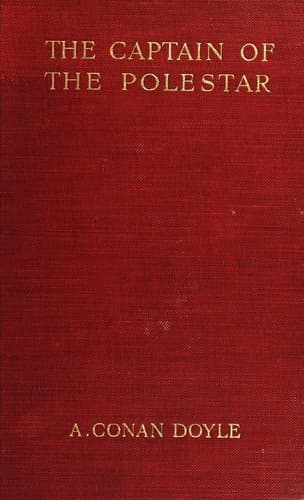
The Captain of the Polestar, and Other TalesDoyle, Arthur Conan
General
The Captain of the Polestar, and Other Tales
Doyle, Arthur Conan
Great Britain -- Social life and customs -- 19th century -- Fiction; Short stories, English
The storm of emotion which had passed through him, and the mental shock
which he had undergone, would have sent many a man into a raging fever,
but John was too strong-willed and too practical to allow his strength
to be wasted at the very time when he needed it most. Within a few days
he realised a portion of his property, and starting for New York, caught
the first mail steamer to England. Day and night, night and day, he
trod the quarter-deck, until the hardy sailors watched the old man with
astonishment, and marvelled how any human being could do so much upon
so little sleep. It was only by this unceasing exercise, by wearing
down his vitality until fatigue brought lethargy, that he could prevent
himself from falling into a very frenzy of despair. He hardly dared ask
himself what was the object of this wild journey? What did he expect?
Would Mary be still alive? She must be a very old woman. If he could but
see her and mingle his tears with hers he would be content. Let her
only know that it had been no fault of his, and that they had both been
victims to the same cruel fate. The cottage was her own, and she had
said that she would wait for him there until she heard from him. Poor
lass, she had never reckoned on such a wait as this.
At last the Irish lights were sighted and passed, Land’s End lay like
a blue fog upon the water, and the great steamer ploughed its way along
the bold Cornish coast until it dropped its anchor in Plymouth Bay. John
hurried to the railway station, and within a few hours he found
himself back once more in his native town, which he had quitted a poor
corkcutter, half a century before.
But was it the same town? Were it not for the name engraved all over
the station and on the hotels, John might have found a difficulty in
believing it. The broad, well-paved streets, with the tram lines laid
down the centre, were very different from the narrow winding lanes which
he could remember. The spot upon which the station had been built was
now the very centre of the town, but in the old days it would have been
far out in the fields. In every direction, lines of luxurious villas
branched away in streets and crescents bearing names which were new
to the exile. Great warehouses, and long rows of shops with glittering
fronts, showed him how enormously Brisport had increased in wealth as
well as in dimensions. It was only when he came upon the old High Street
that John began to feel at home. It was much altered, but still it was
recognisable, and some few of the buildings were just as he had left
them. There was the place where Fairbairn’s cork works had been. It was
now occupied by a great brand-new hotel. And there was the old grey Town
Hall. The wanderer turned down beside it, and made his way with eager
steps but a sinking heart in the direction of the line of cottages which
he used to know so well.
Public-domain text, read in full here on John Shaqi.
Reviews
Reviews
No reviews yet
Be the first to share your thoughts on this work.
Elsewhere in the archive
Join the Discussion
Join the discussion
Sign in to leave a comment or review.
Sign InorCreate an account