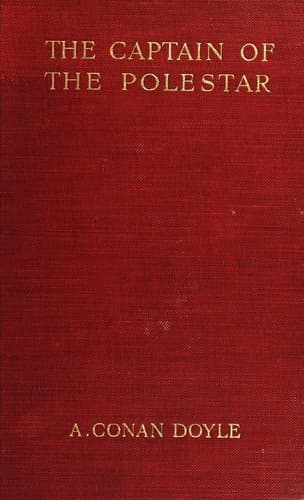
The Captain of the Polestar, and Other TalesDoyle, Arthur Conan
General
The Captain of the Polestar, and Other Tales
Doyle, Arthur Conan
Great Britain -- Social life and customs -- 19th century -- Fiction; Short stories, English
“Worse than that,” said the fisherman. “She’s mortal ill, and not
expected to live. Why, look ye, there’s the doctor’s carriage a-waiting
at her door.”
At this evil tidings old John sprang up and hurried over to the cottage,
where he met the physician returning to his brougham.
“How is your patient, doctor?” he asked in a trembling voice.
“Very bad, very bad,” said the man of medicine pompously. “If she
continues to sink she will be in great danger; but if, on the other
hand, she takes a turn, it is possible that she may recover,” with which
oracular answer he drove away in a cloud of dust.
John Huxford was still hesitating at the doorway, not knowing how to
announce himself, or how far a shock might be dangerous to the sufferer,
when a gentleman in black came bustling up.
“Can you tell me, my man, if this is where the sick woman is?” he asked.
John nodded, and the clergyman passed in, leaving the door half open.
The wanderer waited until he had gone into the inner room, and then
slipped into the front parlour, where he had spent so many happy hours.
All was the same as ever, down to the smallest ornaments, for Mary had
been in the habit whenever anything was broken of replacing it with
a duplicate, so that there might be no change in the room. He stood
irresolute, looking about him, until he heard a woman’s voice from the
inner chamber, and stealing to the door he peeped in.
The invalid was reclining upon a couch, propped up with pillows, and her
face was turned full towards John as he looked round the door. He could
have cried out as his eyes rested upon it, for there were Mary’s pale,
plain, sweet homely features as smooth and as unchanged as though she
were still the half child, half woman, whom he had pressed to his heart
on the Brisport quay. Her calm, eventless, unselfish life had left none
of those rude traces upon her countenance which are the outward emblems
of internal conflict and an unquiet soul. A chaste melancholy had
refined and softened her expression, and her loss of sight had been
compensated for by that placidity which comes upon the faces of the
blind. With her silvery hair peeping out beneath her snow-white cap, and
a bright smile upon her sympathetic face, she was the old Mary improved
and developed, with something ethereal and angelic superadded.
Public-domain text, read in full here on John Shaqi.
Reviews
Reviews
No reviews yet
Be the first to share your thoughts on this work.
Elsewhere in the archive
Join the Discussion
Join the discussion
Sign in to leave a comment or review.
Sign InorCreate an account