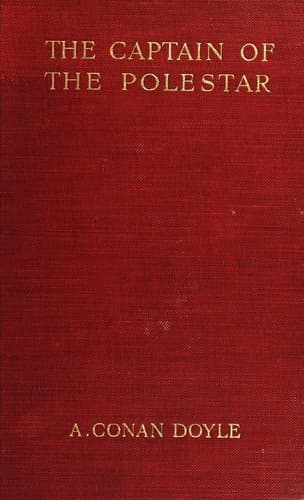
The Captain of the Polestar, and Other TalesDoyle, Arthur Conan
General
The Captain of the Polestar, and Other Tales
Doyle, Arthur Conan
Great Britain -- Social life and customs -- 19th century -- Fiction; Short stories, English
“You will keep a tenant in the cottage,” she was saying to the
clergyman, who sat with his back turned to the observer. “Choose some
poor deserving folk in the parish who will be glad of a home free. And
when he comes you will tell him that I have waited for him until I have
been forced to go on, but that he will find me on the other side still
faithful and true. There’s a little money too--only a few pounds--but I
should like him to have it when he comes, for he may need it, and then
you will tell the folk you put in to be kind to him, for he will be
grieved, poor lad, and to tell him that I was cheerful and happy up to
the end. Don’t let him know that I ever fretted, or he may fret too.”
Now John listened quietly to all this from behind the door, and more
than once he had to put his hand to his throat, but when she had
finished, and when he thought of her long, blameless, innocent life, and
saw the dear face looking straight at him, and yet unable to see him, it
became too much for his manhood, and he burst out into an irrepressible
choking sob which shook his very frame. And then occurred a strange
thing, for though he had spoken no word, the old woman stretched out her
arms to him, and cried, “Oh, Johnny, Johnny! Oh dear, dear Johnny,
you have come back to me again,” and before the parson could at all
understand what had happened, those two faithful lovers were in each
other’s arms, weeping over each other, and patting each other’s silvery
heads, with their hearts so full of joy that it almost compensated for
all that weary fifty years of waiting.
It is hard to say how long they rejoiced together. It seemed a very
short time to them and a very long one to the reverend gentleman,
who was thinking at last of stealing away, when Mary recollected his
presence and the courtesy which was due to him. “My heart is full of
joy, sir,” she said; “it is God’s will that I should not see my Johnny,
but I can call his image up as clear as if I had my eyes. Now stand up,
John, and I will let the gentleman see how well I remember you. He is as
tall, sir, as the second shelf, as straight as an arrow, his face brown,
and his eyes bright and clear. His hair is well-nigh black, and his
moustache the same--I shouldn’t wonder if he had whiskers as well by
this time. Now, sir, don’t you think I can do without my sight?” The
clergyman listened to her description, and looking at the battered,
white-haired man before him, he hardly knew whether to laugh or to cry.
Public-domain text, read in full here on John Shaqi.
Reviews
Reviews
No reviews yet
Be the first to share your thoughts on this work.
Elsewhere in the archive
Join the Discussion
Join the discussion
Sign in to leave a comment or review.
Sign InorCreate an account