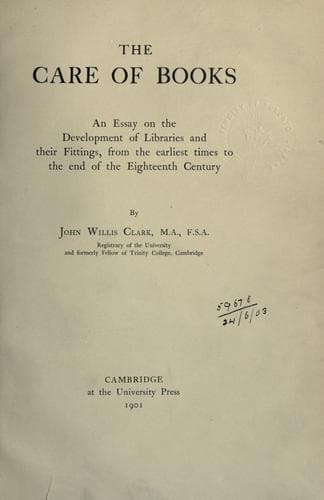
Libraries -- History; Library architecture -- History; Library fittings and supplies -- History
If there had bene in every shyre but one solempne
lybrary, to the preseruacyon of those noble workes, it
had bene yet sumwhat. But to destroy all without
consydyracyon is and wyll be vnto Englande for euer a
moste horryble infamy amonge the graue senyours of other
nacyons. A greate nombre of them whych purchased those
superstycyouse mansyons, reserued of those bokes some to
... scoure theyr candelstyckes, and some to rubbe theyr
bootes. Some they sold to the grossers and sopesellers,
and some they sent ouer see to the boke bynders, not in
small nombre, but at times whole shyppes full, to the
wonderynge of the foren nacyons. I know a merchaunt man
which shall at this tyme be namelesse, that boughte the
contentes of two noble lybraryes for. xl. shyllynges
pryce, a shame it is to be spoken. This stuffe hath he
occupyed in the stede of graye paper by the space of
more than these .x. yeares, and yet he hath store ynough
for many yeares to come[443].
The Universities, though untouched by the suppression, were not allowed to
remain long at peace. In 1549, commissioners were sent by Edward the Sixth
to Oxford and Cambridge. They considered that it fell within their
province to reform the libraries as well as those who used them; and they
did their work with a thoroughness that under other circumstances would
have been worthy of commendation. Anthony Wood[444] has told us in
eloquent periods, where sorrow struggles with indignation, how the college
libraries were treated; how manuscripts which had nothing superstitious
about them except a few rubricated initials, were carried through the city
on biers to the market-place and there consumed. Of the treatment meted
out to the public library of the University he gives an almost identical
account[445]. This library--now the central portion of the Bodleian--had
been completed about 1480. It was well stocked with manuscripts of value,
the most important of which, in number about 600[446], had been given by
Humphrey Duke of Gloucester, between 1439 and 1446. His collection was
that of a cultivated layman, and was comparatively poor in theological
literature. Yet in this home of all that was noble in literature and
splendid in art (for the Duke's copies are said to have been the finest
that could be bought) did this crew of ignorant fanatics cry havoc, with
such fatal success that only three MSS. now survive; and on January 25,
1555-56, certain members of the Senate were appointed "to sell, in the
name of the University, the book-desks in the public library. The books
had all disappeared; what need then to retain the shelves and stalls, when
no one thought of replacing their contents, and when the University could
turn an honest penny by their sale[447]?"
Public-domain text, read in full here on John Shaqi.
Reviews
Reviews
No reviews yet
Be the first to share your thoughts on this work.
Elsewhere in the archive
Join the Discussion
Join the discussion
Sign in to leave a comment or review.
Sign InorCreate an account