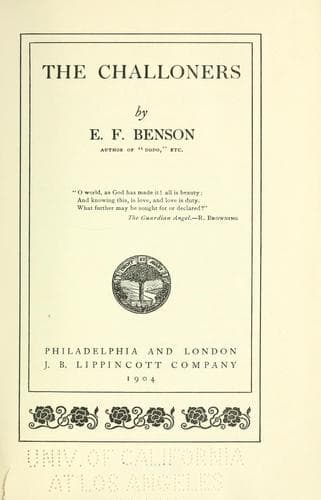
Clergy -- England -- Fiction; England -- Social life and customs -- Fiction; Families -- England -- Fiction
Helen’s visit to Cambridge had been restricted by no statute of
limitations in regard to time, and the days passed on, the vague “few
nights” growing to a week, and the week to a magnified fortnight. For
these quiet, uneventful hours in which (except when the twin was with
her) even the ticking of clocks seemed muffled had an extraordinary and
growing charm for her, since she had learned that behind the outward
placidity in her aunt there lay a very real inward life in which she
longed without possibility of satisfaction and suffered without
bitterness. That somehow to the girl seemed to lift up and consecrate
Aunt Susan’s homely little employments, which, so sweetly and patiently
performed, became symbols and signs of a very beautiful character, and
that which Helen had thought dull, unperceptive, unemotional, was now
lit from within, as it were, by the uncomplaining cheerfulness which
gave such gentle, unquestioning welcome to the limitations set about
her. For Lady Susan, so her niece had now learned, had not from her own
defective eyesight set her horizons so close about her; circumstances,
childlessness had imposed them, and that being so, she had taken up her
place in the narrowed circle with resignation so cheerful that it could
scarcely be called by that rather depressing name. In fact, the gentle
old lady was put on a pedestal in the girl’s mind, and offerings of
incense were made her, a position which now and then she found slightly
embarrassing, for Helen, in her first moment of understanding and in the
reaction from her previous hasty and mistaken judgment, was one torrent
of warm-hearted sympathy, and was disposed to magnify into heroism the
performance of those common tasks, just because she had before labelled
them trivial.
But from home--she must begin taking up her own little burdens at
once--there came no word for her. She herself wrote regularly to her
father, but morning after morning passed, bringing its posts, and still
no answer came to her. Once she saw among the letters laid out for Aunt
Susan one addressed in the brisk, scholarly handwriting, and could not
help glancing at her aunt’s face as she read it. But she said nothing to
Helen, and replaced the letter in its envelope with a troubled little
sigh. Martin, also, she knew had heard from him, but there had been no
message for her, no mention even of her. This omission, this intentional
disregard of her, though it hurt her, made her sorry also, not for
herself, but for him. It was inhuman, but she knew that it was the depth
and earnestness of his feeling about her engagement that made him
inhuman. On the other hand, she heard constantly from Frank, who hinted
that if not a day, at any rate a season might be ever so vaguely
indicated to which he could look forward.
Public-domain text, read in full here on John Shaqi.
Reviews
Reviews
No reviews yet
Be the first to share your thoughts on this work.
Elsewhere in the archive
Join the Discussion
Join the discussion
Sign in to leave a comment or review.
Sign InorCreate an account