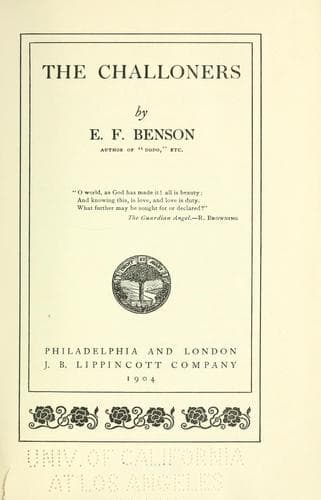
Clergy -- England -- Fiction; England -- Social life and customs -- Fiction; Families -- England -- Fiction
That filled the ear. For the eye there were blue distances, blue shadows
of racing clouds, the sun, and more near the budding trees, and in the
dingle below the woods of Chartries a million daffodils. Helen had
forgotten that they were there, waiting for her, and she came on them
suddenly, and stood quite still a moment with a long pause of pure and
complete delight. The place was carpeted with them; they all danced and
shone and sang together like the morning stars. And as she looked her
eyes grew dim with happy tears.
“Dear God,” she said, “thank you so much.”
Yes, indeed, it was spring; and as she walked on she repeated the word
over and over again to herself, finding a magic in it. It was
everywhere: the sky and the sun were full of it, it burst in those
myriad blossoms from the dark, wholesome soil; it was spring that set
this good wind blowing, it bubbled and chuckled in the chalk-stream,
with its waving weeds and bright glimmering beds of pebbles. Above all,
it was in her own heart on this glorious morning, till she thought it
must almost burst, too, so overflowing was it with sheer, unreasoning
happiness.
Indeed, Martin had been quite right when he had told Karl how happy she
was, and though she did not reason to herself about it, the cause was
abundantly clear. For the last six months she had lived at home, through
days and weeks of ever-recurring difficulties, and with each, as it
presented itself, she had dealt smilingly, patiently. She had made up
her mind on her visit to Cambridge that her duty was clear and obvious,
nothing striking nor picturesque was in the least required, she was
neither going to renounce her future happiness, nor, on the other hand,
to throw all else aside and grasp at it. No heroic knot-cutting measures
of any kind were indicated, except the quiet, unobtrusive heroism of
taking up again, quite simply, quietly, and naturally, all the
straightforward, familiar little duties of her home life which again and
again she had found so tedious. Nor had they been in themselves less
tedious. Only here was the difference,--she had ceased to look upon them
from any point of view except one, namely, that it was quite distinctly
her business to do them. That she had found to be sufficient; it was
enough day by day to get through with them without expenditure of
thought as to whether they were distasteful or not, and her work, her
daily bread, had somehow been sweet and wholesome and nourishing. Truly,
if, as Karl had said, Martin had been growing out of knowledge, his twin
also would be scarcely recognisable.
Public-domain text, read in full here on John Shaqi.
Reviews
Reviews
No reviews yet
Be the first to share your thoughts on this work.
Elsewhere in the archive
Join the Discussion
Join the discussion
Sign in to leave a comment or review.
Sign InorCreate an account