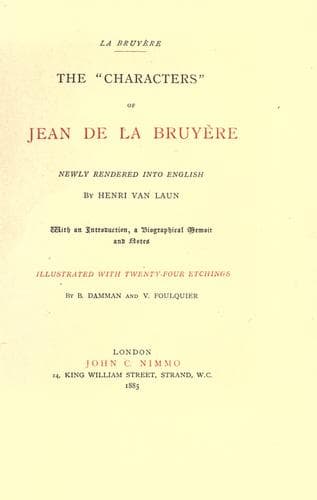
The "Characters" of Jean de La BruyèreLa Bruyère, Jean de
General
The "Characters" of Jean de La Bruyère
La Bruyère, Jean de
Character sketches -- Early works to 1800; Characters and characteristics
(115.) The remembrance of their youth remains green in the heart of old
men; they love the places where they lived; and the persons with whom
they then began an acquaintance are dear to them; they still affect
certain words in use when they first began to speak; they prefer the
ancient style of singing and dancing; and boast of the old fashions
in dress, furnishing, and carriages; they cannot bring themselves to
disapprove of those things which served their passions, and are always
recalling them. Can any one imagine these old men would prefer new
customs and the latest fashions, which they do not adopt, and from
which they have nothing to expect, which young men have invented, and
which give them, in their turn, such a great advantage over their
elders?
(116.) An old man who is careless in his dress, or else overdressed,
increases his wrinkles, and looks as senile as he really is.
(117.) An old man is proud, disdainful, and unsociable if he is not
very intelligent.
(118.) A courtier of a ripe old age, who is a sensible man and has a
good memory, is an inestimable treasure; he is full of anecdotes and
maxims; he knows a good many curious circumstances of the history of
the age, which are never met with in books; and from him we may learn
such rules for our conduct and manners which can be depended upon,
because they are based on experience.[569]
(119.) Young men can bear solitude better than old people, because
their passions occupy their thoughts.
(120.) Though Philip[570] is rather old, he is over-natty and
effeminate, and only cares for little dainties; he has studied the art
of eating, drinking, sleeping, and taking exercise, and scrupulously
observes the smallest rules he has prescribed for himself, which all
tend to his comfort; even a mistress, if his system allowed him to
keep one, could not tempt him to break them; he is overburdened with
superfluities, to which he is so accustomed that he cannot do without
them. He thus increases and strengthens the ties which bind him to
life, and employs the remainder of it in making its loss more grievous.
Was he not already sufficiently afraid of dying?
Public-domain text, read in full here on John Shaqi.
Reviews
Reviews
No reviews yet
Be the first to share your thoughts on this work.
Elsewhere in the archive
Join the Discussion
Join the discussion
Sign in to leave a comment or review.
Sign InorCreate an account