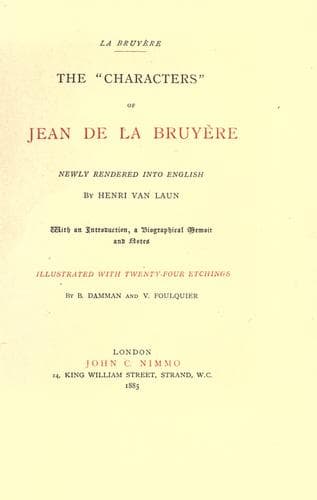
The "Characters" of Jean de La BruyèreLa Bruyère, Jean de
General
The "Characters" of Jean de La Bruyère
La Bruyère, Jean de
Character sketches -- Early works to 1800; Characters and characteristics
(122.) Clito[572] never had but two things to do in his life, to dine
at noon and to eat supper in the evening;[573] he seems only born
for digestion, and has only one subject of conversation, namely, the
_entrées_ of the last dinner he was present at, and how many different
kinds of _potages_[574] there were; he then talks of the roasts and
_entremets_; remembers precisely what dishes were brought up after
the first course, does not forget the side-dishes, the fruit and the
_assiettes_;[575] names all the wines and every kind of liquor he has
drunk; shows himself as well acquainted as a man can possibly be with
culinary language, and makes his hearer long to be at a good dinner,
provided he were not there. He prides himself on his palate which
cannot be imposed upon, and has never been exposed to the terrible
inconvenience of being compelled to eat a wretched stew or to drink
an indifferent wine. He is a remarkable person in his way, who has
brought the art of good living to the highest perfection; there never
will be another man who ate so much and so nicely; he is, therefore,
the supreme arbiter of dainty bits, and it would hardly be allowable
to like anything he did not approve of. But he is no more! When he was
almost dying he still would be carried to the table, and had guests to
dinner on the day of his death. Wherever he may be he is sure to eat;
and should he rise from the grave it will be to eat.
(123.) Ruffinusʼ hair begins to turn grey, but he is healthy; his ruddy
cheeks and sparkling eyes promise him at least twenty years more; he
is lively, jovial, familiar, and does not care for anything; he laughs
heartily, even when he is alone, and without any cause; he is satisfied
with himself, with his family, his little fortune, and calls himself
fortunate. Some time since he lost his only son, a young man of great
promise, who might have become an honour to his family; other people
shed tears, but he did not, and merely said, “My son is dead, and his
mother will soon follow him,” and then he was comforted. He has no
passions, no friends nor enemies; no one troubles him; everybody and
everything suits him; he speaks to those he never saw before with the
same freedom and confidence as to those he calls his old friends, and
very soon tells them his bad jokes and stories. Some people address him
and then leave him, but he does not mind it, and the tale he began to
one person he finishes to another who has just come.
Public-domain text, read in full here on John Shaqi.
Reviews
Reviews
No reviews yet
Be the first to share your thoughts on this work.
Elsewhere in the archive
Join the Discussion
Join the discussion
Sign in to leave a comment or review.
Sign InorCreate an account