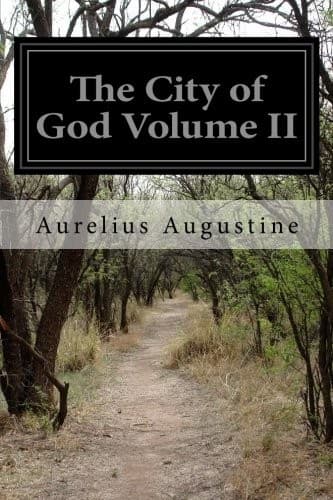
The City of God, Volume IIAugustine, of Hippo, Saint
ReligionChristian
The City of God, Volume II
Augustine, of Hippo, Saint
Apologetics -- Early works to 1800; Kingdom of God -- Early works to 1800
What shall I say of these judgments which men pronounce on men, and
which are necessary in communities, whatever outward peace they
enjoy? Melancholy and lamentable judgments they are, since the judges
are men who cannot discern the consciences of those at their bar,
and are therefore frequently compelled to put innocent witnesses to
the torture to ascertain the truth regarding the crimes of other
men. What shall I say of torture applied to the accused himself?
He is tortured to discover whether he is guilty, so that, though
innocent, he suffers most undoubted punishment for crime that is
still doubtful, not because it is proved that he committed it, but
because it is not ascertained that he did not commit it. Thus the
ignorance of the judge frequently involves an innocent person in
suffering. And what is still more unendurable--a thing, indeed, to
be bewailed, and, if that were possible, watered with fountains of
tears--is this, that when the judge puts the accused to the question,
that he may not unwittingly put an innocent man to death, the result
of this lamentable ignorance is that this very person, whom he
tortured that he might not condemn him if innocent, is condemned to
death both tortured and innocent. For if he has chosen, in obedience
to the philosophical instructions to the wise man, to quit this life
rather than endure any longer such tortures, he declares that he has
committed the crime which in fact he has not committed. And when he
has been condemned and put to death, the judge is still in ignorance
whether he has put to death an innocent or a guilty person, though he
put the accused to the torture for the very purpose of saving himself
from condemning the innocent; and consequently he has both tortured
an innocent man to discover his innocence, and has put him to death
without discovering it. If such darkness shrouds social life, will
a wise judge take his seat on the bench or no? Beyond question he
will. For human society, which he thinks it a wickedness to abandon,
constrains him and compels him to this duty. And he thinks it no
wickedness that innocent witnesses are tortured regarding the crimes
of which other men are accused; or that the accused are put to the
torture, so that they are often overcome with anguish, and, though
innocent, make false confessions regarding themselves, and are
punished; or that, though they be not condemned to die, they often
die during, or in consequence of, the torture; or that sometimes
the accusers, who perhaps have been prompted by a desire to benefit
society by bringing criminals to justice, are themselves condemned
through the ignorance of the judge, because they are unable to prove
the truth of their accusations though they are true, and because the
witnesses lie, and the accused endures the torture without being
moved to confession. These numerous and important evils he does not
consider sins; for the wise judge does these things, not with any
Public-domain text, read in full here on John Shaqi.
Reviews
Reviews
No reviews yet
Be the first to share your thoughts on this work.
Elsewhere in the archive
Join the Discussion
Join the discussion
Sign in to leave a comment or review.
Sign InorCreate an account