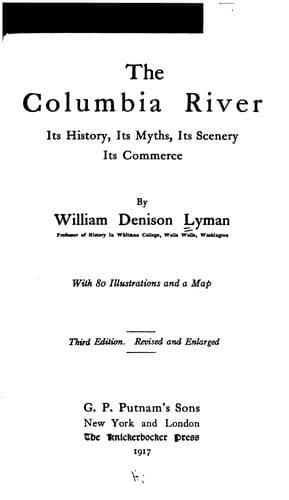
The Columbia River: Its History, Its Myths, Its Scenery, Its CommerceLyman, William Denison
History
The Columbia River: Its History, Its Myths, Its Scenery, Its Commerce
Lyman, William Denison
Columbia River; Columbia River -- Description and travel; Columbia River -- History
By the walnut hearth-fires in many a home of the prairie States and at the
corn-huskings and quilting bees the talk of Oregon and the forests of the
Columbia, and the rich pasture lands of the Willamette, and the salmon and
game, and genial climate and majestic mountains, went the rounds. Interest
grew into enthusiasm, enthusiasm waxed hot, and in the early spring the
great immigration of 1843 set forth from Westport, Missouri, for the
Columbia waters. Though the immigration of 1843 was the earliest of any
size and the first with any number of women and children, it had perhaps
the least trouble and misfortune and the most romance and gayety and
enthusiasm of any. The experience of crossing the plains was one which
nothing else could duplicate;--the hasty rising in the chill damp of the
morning, the preparing the cattle and horses for the long, hard drive, the
rounds of the waggons to strengthen bolts and tires and tongues, the
loading of the rifles for possible hostile Indians or buffalo, the setting
forth of the scouts on horseback, the long train strung across the dusty
plain, the occasional bands of wild Indians emerging like a whirlwind from
the broad expanse, and then the approaching cool of night with its hurried
rest on the rough prairie sod. Sometimes there were nights of storm and
stampede and darkness. Sometimes savage beasts and savage men startled the
train, or one of the stupendous herds of buffalo went thundering across
the prairie. Then came the first glimpse of snowy heights, then of deep
canyons, and then the summit was attained, and far westward stretched the
maze of plains and mountains through which the Snake River, the greatest
of the tributaries of the Columbia, took its swift way.
During most of the journey, Dr. Marcus Whitman was guide, physician, and
friend. While severe controversy has arisen as to the extent of his
services in organising the immigration, the testimony is unvarying as to
the value of his presence with the train. Last to bed at night and first
up in the morning, attending both people, cattle, and horses in their
sicknesses and accidents, ahead of the train on horseback to find the
passes of the hills and the fords of the rivers, the watcher by night and
the pilot by day, the missionary doctor was the veritable "Mr. Greatheart"
of the immigration.
Public-domain text, read in full here on John Shaqi.
Reviews
Reviews
No reviews yet
Be the first to share your thoughts on this work.
Elsewhere in the archive
Join the Discussion
Join the discussion
Sign in to leave a comment or review.
Sign InorCreate an account