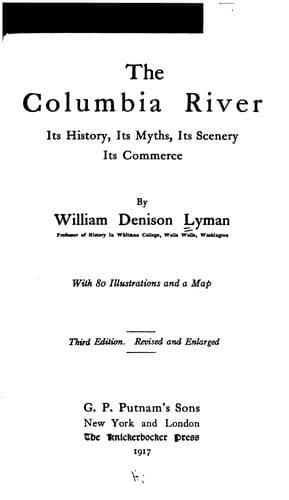
The Columbia River: Its History, Its Myths, Its Scenery, Its CommerceLyman, William Denison
History
The Columbia River: Its History, Its Myths, Its Scenery, Its Commerce
Lyman, William Denison
Columbia River; Columbia River -- Description and travel; Columbia River -- History
The enterprising Yankees rapidly drew to the front, so that during the
years from 1790 to 1818, the records show one hundred and eight American
vessels regularly engaged in the business, while only twenty-two English,
with a few Portuguese and French are found. It should, of course be
remembered that the tremendous strife of the Napoleonic Wars was
engrossing the attention of European nations during that time. So well
known did the Boston navigators become in that period that the common name
of Americans used by the Oregon Indians was "Bostons." Robert Gray, the
discoverer of the Columbia River, was fitted out by Bulfinch and others of
the first Boston Company. During the period under consideration the
profits of the traffic were usually very great, though variable, sometimes
actual losses being incurred, while disaster from wreck, storm, scurvy,
and murderous Indians was frequent. During the two years, 1786 and 1787,
if Dixon is to be followed, there were sold in Canton five thousand eight
hundred sea-otter hides for $160,700. Swan figures that with the four
years ending with 1802, forty-eight thousand five hundred skins were sold.
Sturgis states that he knew a capital of $50,000 to yield a gross income
of $284,000. He relates that he had collected as high as six thousand fine
skins in a single voyage and once secured five hundred and sixty of the
best quality in one day. The Indians, however, learned to become very
expert traders, and as they discovered the eagerness with which the whites
sought their furs, they raised the price. They became, moreover, very
capricious and unreliable, so that the phenomenal profits could no longer
be obtained.
The stage of the history of the fur-trade of which we have thus far spoken
may be called its first era of a free-for-all rush to the new seas, with
no vast moneyed interests in any position of leadership. But commercial
conditions were already in existence which were bound to reverse the
situation.
Public-domain text, read in full here on John Shaqi.
Reviews
Reviews
No reviews yet
Be the first to share your thoughts on this work.
Elsewhere in the archive
Join the Discussion
Join the discussion
Sign in to leave a comment or review.
Sign InorCreate an account