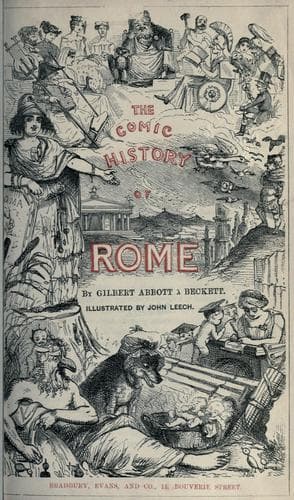
The Comic History of RomeÀ Beckett, Gilbert Abbott
History
The Comic History of Rome
À Beckett, Gilbert Abbott
Rome -- History -- Humor; Wit and humor, Pictorial
In the year of the City 390, a plague broke out in Rome, and the
calamity, which swallowed up thousands, being ascribed to the gods,
repasts were prepared for them, under the title of _lectisternia_, in
order to draw off their appetites from the people. The richest luxuries
were laid out upon tables, to which the gods were invited; but these
tables caused no diminution in the tables of mortality. As the guests
did not accept in person the invitations addressed to them, they were
represented by images; but this imaginary attendance at a real feast fed
nothing but the superstition of the people. A statue of Jupiter was
laid, at full length, upon a couch of ivory, covered with the softest
cushions; but it was found impossible to produce the sort of impression
that was so earnestly desired. Chairs were also set round for the
goddesses, but none came forward to take the chair at this unfortunate
banquet. An effort was then made to divert the attention of the gods, by
getting up stage plays, or histriones:[27] but the gods did not
patronise the drama in those days, more than in our own; and whether the
Olympian dinner-hour interfered, or whether no interest was felt in an
entertainment translated from Etruria, as the English drama is from
France, the result was the same in both cases, for the plays, during
their short-lived career, were dead failures. To add to the misery of
the whole affair, while the stage performances were unattended, there
was an inconvenient "succession of overflows" of the Tiber's banks,
which damped the spirits and deluged the houses of the inhabitants.
Seizing hold of every piece of superstition, instead of taking the
pestilence fairly in hand, the Romans, hearing that a plague had once
been stopped by knocking a nail into the wall of a temple, resolved on
going on that absurd tack; and, for this purpose, a hammer was put by
the ninny-hammers into the hands of Manlius. As the pestilence had by
this time begun to wear itself out, the people were foolish enough to
suppose that the plague had been driven in with the nail; and Manlius
having fulfilled the task, which any carpenter might have performed,
resigned the dictatorship.
Public-domain text, read in full here on John Shaqi.
Reviews
Reviews
No reviews yet
Be the first to share your thoughts on this work.
Elsewhere in the archive
Join the Discussion
Join the discussion
Sign in to leave a comment or review.
Sign InorCreate an account