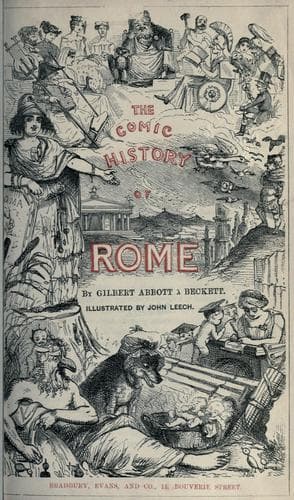
The Comic History of RomeÀ Beckett, Gilbert Abbott
History
The Comic History of Rome
À Beckett, Gilbert Abbott
Rome -- History -- Humor; Wit and humor, Pictorial
While on the subject of the drama, as represented at Rome in the days of
Plautus and Terence, we may refer to the fact that masks were worn by
the actors, which gave to a theatrical performance some absurd and not
very interesting features. There were several sets of masks among the
properties of a regular theatre, beginning with that of the first tragic
old man, which had a quantity of venerable white worsted attached to it
for hair, with cheeks as chalky as grief and tears, strong enough to
have washed out the fastest colour, might be supposed to have rendered
them. The mask of the second tragic old man was less pale than that of
the first, for he was not supposed to have attained to that universal
privilege of aged heroism,--a countenance sicklied o'er with a pale coat
of whitewash. The mask of the tragic young man, or youthful hero, was
remarkable for its luxuriant head of hair, which, from the earliest days
of the drama to the present hour, seems to be accepted as the stage
indication of a noble character. The tragic masks for slaves embraced
some interesting varieties, including a sharp nose, intended to be
indicative of many a blow from fortune's hand,--a sunken eye, to bespeak
a sorry look-out,--and, occasionally, long white hair, quite straight,
which was supposed to convey the idea of the party having seen better
days, though the analogy is difficult, unless the lankiness of the locks
may be held to show that a favourable turn has in vain been waited for.
The mask of a tragic lady had all those signs of a genuine female in
distress which are even to this day required on the stage, where long
black hair, in terribly straightened circumstances, is the emblem of an
anxious mind, which has long been a stranger to curl-papers. When
insanity, as well as anguish, had to be represented by the mask, the
hair was undivided in the centre, but floated in wild profusion, as if
the wearer had gone through a great deal, and as if, whatever she had
gone through, her hair had caught in the middle of.
The classical mask of the first comic old man was drawn excessively mild
and benevolent, to indicate that propensity for scattering purses among
the poor, and bestowing his daughter, with some millions of sesterces,
on young Lucius, which were the probable attributes of the Greek and
Latin stage veteran. There was also the mask of the testy old man, who
was represented perfectly bald, as if he was always taking something or
other into his head which had torn all the hair out of it. The masks for
comic young men had the ordinary characteristics of stage humour,
including red hair, pug noses, broad lips, and raised eyebrows, which
are in these days supplied from those recognised sources of dramatic
drollery, the burnt cork, the gum-pot, and the paint-box.
Public-domain text, read in full here on John Shaqi.
Reviews
Reviews
No reviews yet
Be the first to share your thoughts on this work.
Elsewhere in the archive
Join the Discussion
Join the discussion
Sign in to leave a comment or review.
Sign InorCreate an account