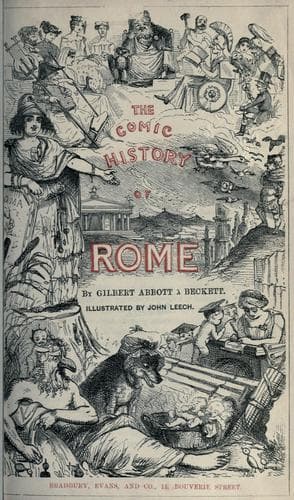
The Comic History of RomeÀ Beckett, Gilbert Abbott
History
The Comic History of Rome
À Beckett, Gilbert Abbott
Rome -- History -- Humor; Wit and humor, Pictorial
When the tribune Memmius heard of the venality of the ambassadors, and
of the money they had corruptly made by their services abroad, he, whose
duties kept him at home, became more indignant than ever. He denounced,
in abusive language, the abuse of which they had been guilty, and
succeeded at last in carrying a motion that Jugurtha should appear to
answer for his offences of bribery and corruption before the Senate. The
summons was carried to Africa, by the stern and incorruptible Cassius,
who refused every offer of cash, and insisted on the personal appearance
of Jugurtha at the time and place appointed. The artful Numidian came
with a very small retinue and a very long purse; for he knew that in
meeting such an antagonist as Rome, he should not have to draw the steel
from the scabbard, but the gold from the treasury. He threw purses in
all directions; and so extensive was his bribery, that the criminals who
had accepted his money were a strong majority over the few who were
qualified, by not having participated in the offence, to sit in judgment
over it. Memmius, who had seen none of Jugurtha's gold, insisted on his
giving up the names of those who had received it; but there was such a
vehement and general shout of "No," that any further inquiry as to who
were the culprits, would have been quite superfluous.
The only punishment the Senate ventured to inflict upon Jugurtha, was a
sentence of banishment; and it was indeed quite natural that the
dishonourable members should have been glad to send speedily out of the
way the principal witness to their own turpitude. As Jugurtha quitted
Rome, he expressed his disgust at her venality, in a sentiment which
came with but an ill grace from an accomplice in her infamy. "Oh!" he
exclaimed, with an air of affected horror, "Oh! thou venal city; thou
wouldst sell thyself to perdition, if thou couldst only find a
purchaser!" The exact point at which this claptrap was uttered, who was
at hand to hear it, and supposing the reporters to have been present,
whether they proceeded to take it down, are points which the historians
have not shown any disposition to look into.
After the retirement of the only witness, the inquiry into the bribery
cases was prosecuted with considerable vigour. Scaurus, who had been one
of the chief delinquents, attempted to expiate his own faults by getting
himself appointed a member of the committee, and passing as severe
sentences as he could upon his fellow criminals.
Public-domain text, read in full here on John Shaqi.
Reviews
Reviews
No reviews yet
Be the first to share your thoughts on this work.
Elsewhere in the archive
Join the Discussion
Join the discussion
Sign in to leave a comment or review.
Sign InorCreate an account