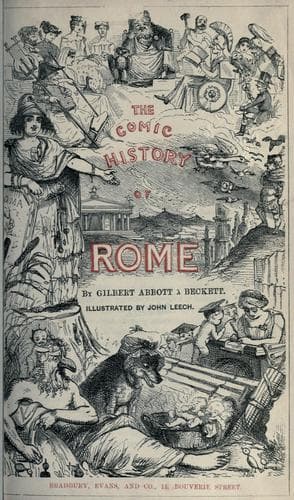
The Comic History of RomeÀ Beckett, Gilbert Abbott
History
The Comic History of Rome
À Beckett, Gilbert Abbott
Rome -- History -- Humor; Wit and humor, Pictorial
It was many years before the Bill of Terentillus--which has been
specially noted--was at length taken up, when the patricians graciously
consented to a change in the laws, and offered the benefit of their
services into the bargain, by taking upon themselves to determine the
sort of change that was required. Hitting, by anticipation, on the
modern expedient for delaying useful measures, the patricians appointed
a select committee to inquire into law reform, and, by way of rendering
the chances of legislation still more remote, they ordered the members
to proceed to Athens, where, under the enervating influence of Attic
associations, they were likely to go to sleep over the subject of their
labours. The special commissioners became, no doubt, so thoroughly Greek
in all their ideas, that, even the preparation of their report was
deferred until the Greek Kalends.
FOOTNOTE:
[17] Among the other difficulties of this story is the comparatively
trifling one, that the Fabian race did not become extinct; but tradition
hops over this dilemma, by leaving one of the family behind to serve as
a father to future Fabii.
CHAPTER THE EIGHTH.
FROM THE ESTABLISHMENT OF THE DECEMVIRATE TO THE TAKING OF VEII.
[Illustration: Roman Bull and Priest of the period.]
The Romans, being at peace abroad, began to think of improving the means
of quarrelling among themselves at home, and a desire for law reform
became general. Three senators had been sent to Athens to collect
information, but what they picked up in Greece was so thoroughly Greek
to them, that they were obliged to get it translated into Latin by one
Hermodorus, an Ephesian refugee, before they could understand a word of
it.[18] As one job naturally leads to another, it was arranged that
three commissioners having been employed in cramming, the process of
digesting should be entrusted to ten more, who were called the
Decemviri. These were appointed from the patricians, after a struggle on
the part of the plebeians to get five selected from their own order;
but, with a laudable regard to public order, they withdrew their
opposition. The especial object for which the Decemviri had been
appointed was to frame a new code of laws, but it seems to have been
always understood that the practical purpose of a commission is to delay
an object, quite as much as to further it. Lest the Decemviri should
proceed too rapidly with the work they had been specially chosen to do,
arrangements were made for distracting their attention from it by
throwing on them the whole business of Government. Had they been modern
commissioners of inquiry, they would have needed no excuse for delay;
but, with a stubborn resolution to get through their task, they
surmounted, or avoided, the obstacles they might have been excused for
stumbling at. Instead of making their administrative duties an
interruption to their legislative labours, and urging the necessity for
attending to both as a plea for the performance of neither, the
Public-domain text, read in full here on John Shaqi.
Reviews
Reviews
No reviews yet
Be the first to share your thoughts on this work.
Elsewhere in the archive
Join the Discussion
Join the discussion
Sign in to leave a comment or review.
Sign InorCreate an account